-

+86-13404286222
-

hmjxboss@gmail.com

INQUIRE NOW

+86-13404286222
hmjxboss@gmail.com
INQUIRE NOW
The answer is not a one-size-fits-all route. For heavy-duty equipment, forged parts deliver the best strength-to-cost ratio for high-cycle fatigue and impact-loaded components; cast parts win when the geometry is complex or the tooling cost can be amortized over a sufficient volume; welded fabrications become the only economic option for oversized assemblies and low-volume maintenance parts. The selection criterion is not material alone but the combination of geometry, load spectrum, and batch size.
Strength-to-cost ratio in this context means the functional mechanical performance achieved per unit of total manufacturing cost, including material, tooling, machining, inspection, and transport.
The shop-floor comparison starts with three numbers: fatigue endurance, part cost, and design freedom. No single route wins all three. Forging leads in fatigue strength but carries higher tooling and machining costs. Casting offers the widest geometric freedom and the lowest piece price at volume, yet its fatigue endurance is typically lower. Welding sits in between, capable of building parts too large for a single forging or casting, but it introduces a weld zone that can limit service life.
| Attribute | Forged | Cast | Welded Fabrication |
| Relative fatigue strength | High | Baseline | Medium |
| Relative part cost | Highest | Lowest | Medium |
| Most economical batch | 10-100 pieces | 500+ pieces | 1-10 pieces |
| Material yield | 60-75% | 85-90% | 80-85% |
The table is a starting point. The real decision always involves load spectrum and batch size. A 5-ton cast housing can be forged, but the tooling cost would be absurd unless the volume is very high. That is why the strength-to-cost ratio is evaluated per part, not per material.
For an oil field blowout preventer body, safety-critical construction with high-pressure containment, a forged body is often specified even when a cast body would be cheaper. The inherent defect risk of castings, specifically small voids that can grow under pressure, makes forging the preferred route for pressure-containing equipment.
Forging is the most economical route when the part must survive repeated loads, shock loads, or high bending stress. The closed-die forging process aligns the grain flow with the part outline, producing a higher fatigue limit than the same alloy in cast form.
For a 40CrNiMo steel gear, industry experience commonly shows a fatigue limit of 560-600 MPa in the forged and air-cooled condition, compared with 430-470 MPa for the same alloy when cast and heat-treated. That 25-30% improvement justifies the tooling cost when the part undergoes millions of load cycles.
The material family matters as much as the process. Duplex stainless steel 2205 and nickel alloys like Inconel 718 are commonly forged for their combination of strength and corrosion resistance in marine and petrochemical applications.
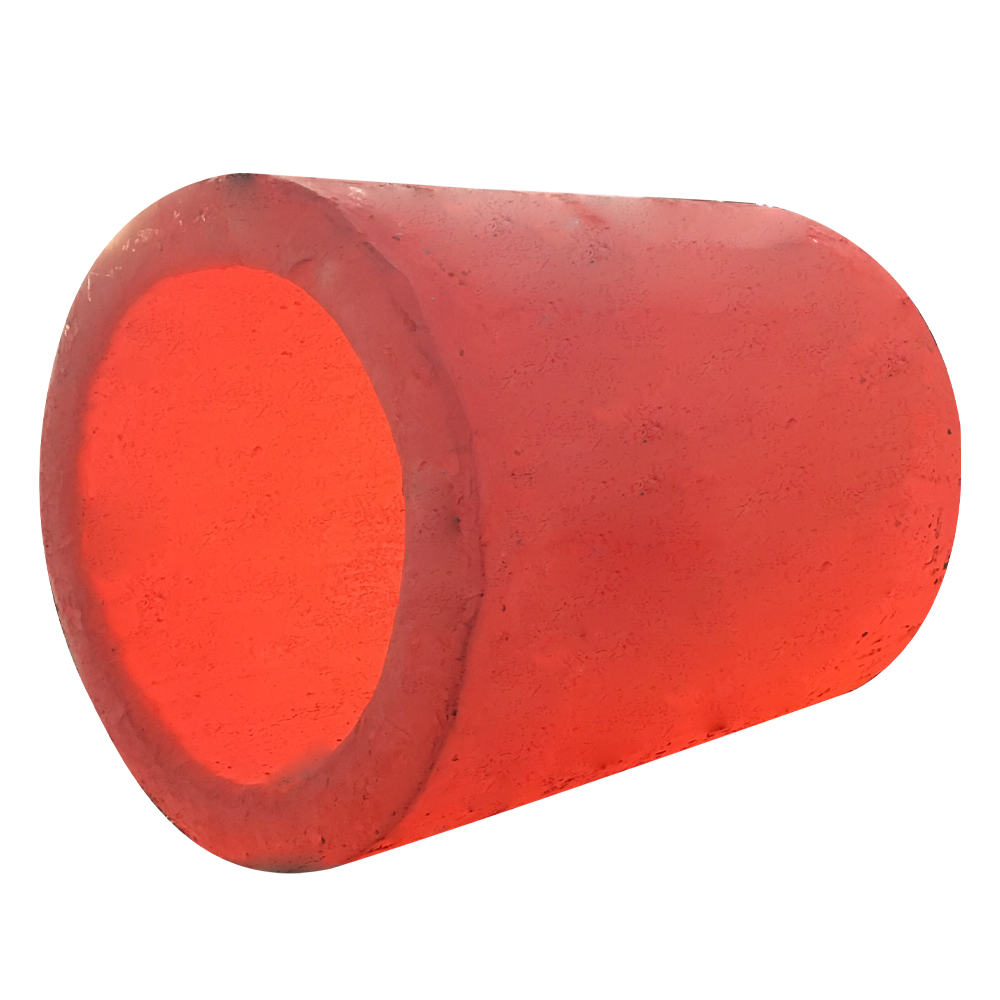 Forging and Casting Services for Complex Metal PartsThe choice between forging and casting depends on part complexity and volume. Forging offers strength and grain flow, while casting produces near-net shapes with internal cavities, reducing machining and tooling costs.View Product →
Casting is the strength-to-cost leader when part geometry is complex, internal cavities are required, or the production volume allows tooling amortization. The ability to produce near-net shapes is the single biggest cost driver.
A large compressor cylinder housing, for example, is almost always cast because no forging process can create the internal porting and ribs without extensive machining. A casting that starts with 85-90% material utilization reduces pre-machining volume by up to 40% compared with a solid forging.
Cast components do demand discipline in non-destructive testing. Shrinkage porosity, gas voids, and segregation must be controlled by gating design and verified with magnetic particle or ultrasonic inspection. The strength of a cast part is only as good as the quality of the casting.
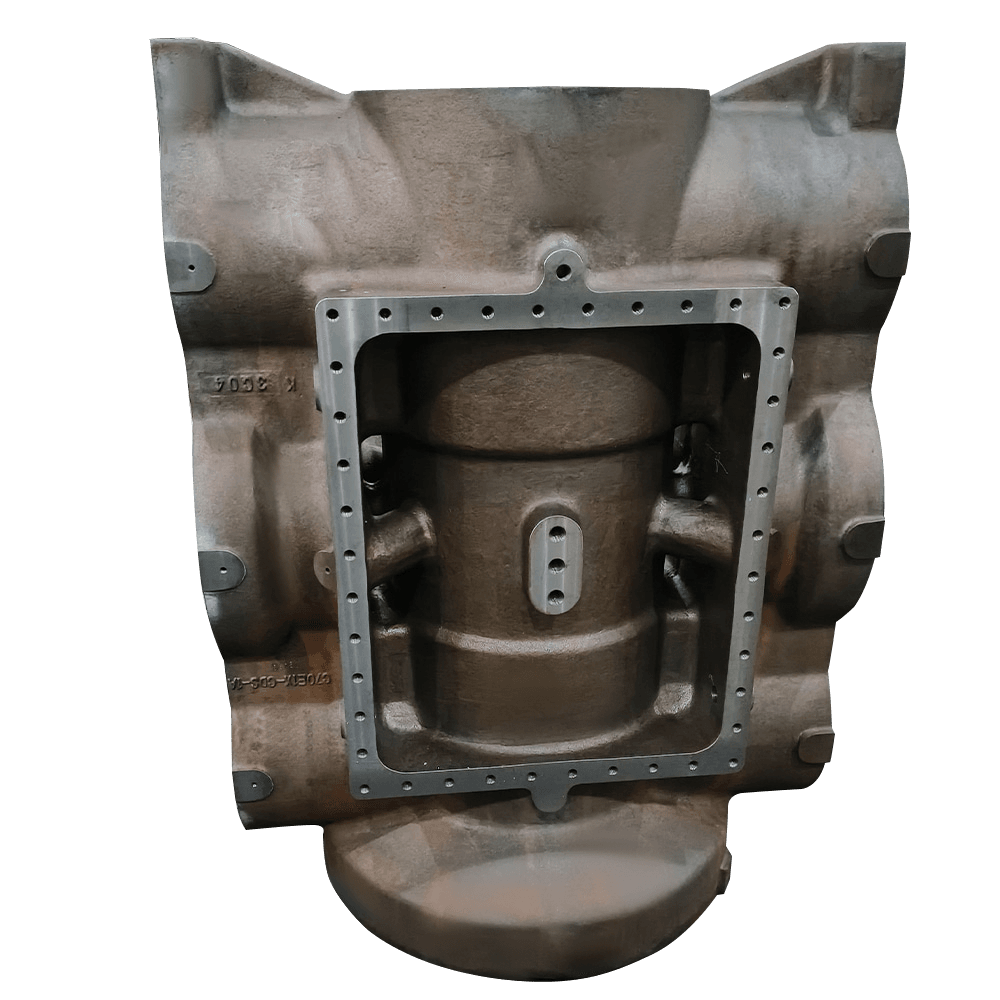 Casting of Compressor Housings for Heavy-Duty ApplicationsLarge compressor housings require robust castings that can withstand high loads. Advanced processes ensure structural stability and safety, making them suitable for various industrial sectors.View Product →
Welding becomes the best strength-to-cost route when the part is too large or too complex to be forged or cast in one piece, or when the batch size is too small to justify tooling. For a one-off repair on a 10-ton mill roller, welding out-performs all alternatives.
Welded fabrications allow dissimilar materials to be combined, such as low-alloy base steel with a wear-resistant overlay, or a cast hub joined to a rolled plate. The weld zone, however, is the weakest link: a properly qualified butt weld in structural steel typically delivers 80-90% of base material strength, so the design must account for this.
For heavy-duty equipment, welded parts are usually stress-relieved before finish machining. This is a critical production step at Jiangyin Huanming Machinery Co., Ltd., where precision turning, boring, and grinding are used to achieve final tolerances of 8 micron after welding-induced distortion is removed.
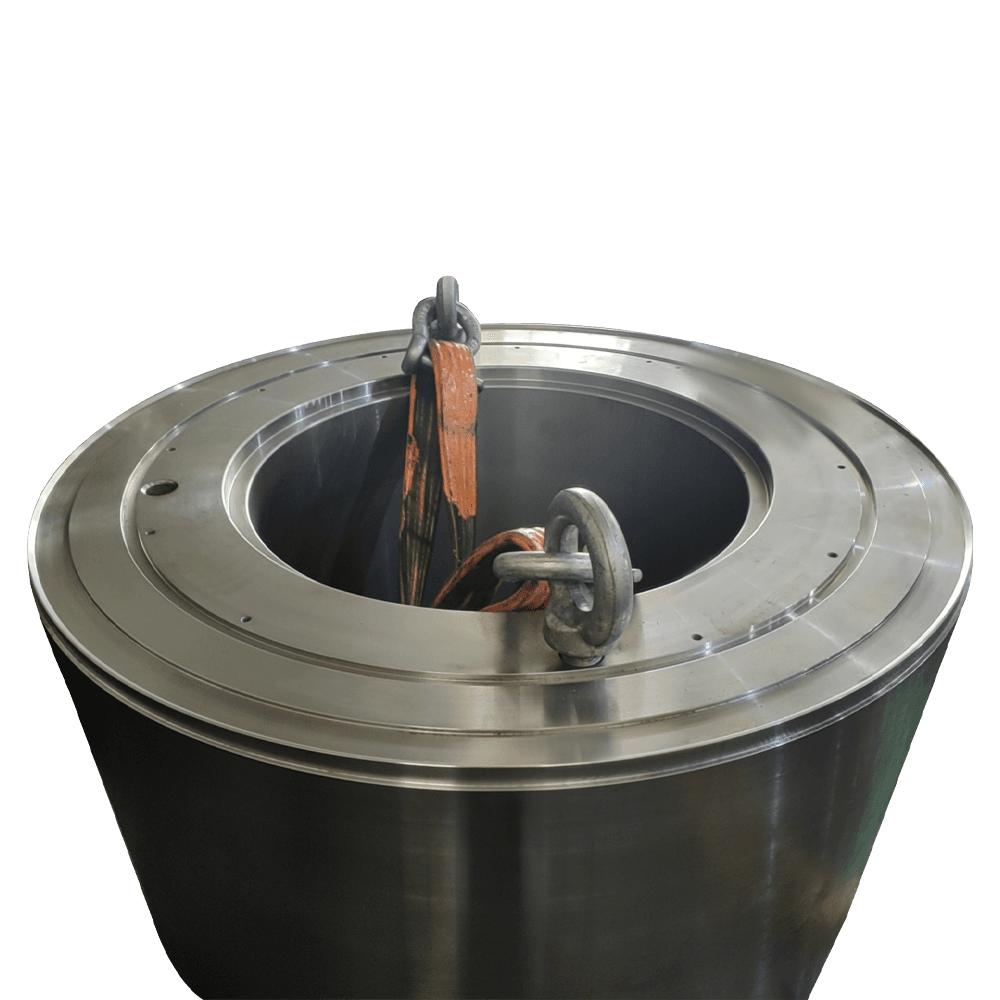 High-Speed Transmission Gears for Precision Power TransmissionThese gears are made from high-strength alloys and precision-machined to minimize noise and vibration. They ensure efficient power transfer in aerospace, automotive, and construction machinery.View Product →
To decide quickly and defensibly for your own part, follow this four-step framework. It has been applied in sourcing reviews at Jiangyin Huanming Machinery for metallurgical, oil and gas, and wind power components.
For a high-speed transmission gear with a 20,000 Nm rating and annual demand of 40 pieces, a closed-die forging is justified. For a cast pump body with complex internal passages and a 1,000-piece order, casting is the clear winner. For a wind power main shaft flange with a diameter exceeding 2 meters and a quantity of 5, a welded fabrication from rolled plate is the only sensible route.
The full decision process is documented in our technical article on forging and casting parts. For a specific part drawing, the fastest path is to contact their engineering team with the load case and target volume.
No single route is best. Forged parts win for high-cycle fatigue and impact load. Cast parts win for complex geometry and high volume. Welded parts win for oversized, low-volume applications. The decision is based on geometry, load spectrum, and batch size.
Only if the part is not fatigue-dominated. Casting can reduce cost by 20-40% for a complex shape, but the fatigue limit may drop by 25-30%. For safety-critical rotating parts, swapping the route requires full re-qualification.
A high-quality weld in low-alloy steel generally reaches 80-90% of base metal strength. Forging in the same steel is isotropic and stronger in the direction of grain flow. Welding is adequate for static and low-frequency loads but requires fatigue analysis for cyclic loading.
The single most important factor is batch size, because tooling cost must be amortized. A forging die can cost ten times as much as a casting pattern; a welded fabrication needs no tooling but requires careful stress relief and inspection.
 No. 16 Dayuanli Road, Yunting Street, Jiangyin City, Jiangsu Province, China
 +86-13404286222 / +86-13404286222
 +86-510-86668678
 hmjxboss@gmail.com
Copyright © Jiangyin Huanming Machinery Co., Ltd. All Rights Reserved.Custom Large Components Mechanical Processing Manufacturers

 English
 中文简体
中文简体 русский
 日本語
日本語 Español