-

+86-13404286222
-

hmjxboss@gmail.com

INQUIRE NOW

+86-13404286222
hmjxboss@gmail.com
INQUIRE NOW
The casting pump body, as a crucial component in pumping equipment, carries the core of the pump system's operation and is one of the important factors in ensuring the structural stability and working efficiency of the pump. In the design and manufacturing of pumps, the choice of casting process directly affects the performance of the pump body, especially under high flow rates, high pressure, and harsh working conditions, where the quality and durability of the cast pump body are particularly critical.
The design of the casting pump body must consider a variety of factors, among which corrosion resistance, wear resistance, high-temperature resistance, strength, and rigidity are crucial. During pump operation, the pump body usually needs to withstand the impact force and pressure from the fluid flow, especially with high-temperature, corrosive liquids or gases. This requires the cast pump body to have good mechanical properties and chemical stability.
The strength requirements of the pump body are high, especially during high-speed operation, where deformation and cracks in the pump body can affect the normal operation of the pump. Therefore, the casting process must ensure the uniformity and integrity of the pump body structure to avoid any possible defects. The corrosion resistance of the cast pump body is also a key element in the design, especially when the pump body needs to handle acidic or alkaline liquids or corrosive media such as seawater. The selection of pump body materials and surface treatment processes is particularly important.
The rigidity of the pump body is also an important consideration in the design. In some high-pressure, high-flow pump systems, the pump body needs to have sufficient rigidity to withstand external loads and internal pressure fluctuations of the medium. To meet these stringent performance requirements, cast pump bodies often require the use of special alloy materials and advanced casting technologies.
The manufacturing process of cast pump bodies includes several stages, including mold making, melting, casting, cooling, and post-processing. Each stage requires precise control to ensure the quality and performance of the pump body. These stages will be described in detail below.
The first step in manufacturing a cast pump body is mold making, usually using sand casting or metal mold casting techniques. In sand casting, a precise mold needs to be made according to the design drawings. This process requires special attention to the accuracy and surface finish of the mold. Through precise model making, the casting process ensures that the pump body has accurate dimensions and a stable shape.
Melting is a core step in casting pump bodies. Selecting the appropriate casting material is crucial for ensuring the performance of the pump body. Common materials for casting pump bodies include cast iron, cast steel, and stainless steel. Cast iron is widely used in many pump bodies due to its good castability and wear resistance. During melting, the metal material needs to be heated to a liquid state, and the stability of its chemical composition must be ensured to avoid impurities affecting the casting quality.
The pouring process during casting also requires strict control. During casting, the fluidity and filling of the molten metal must be ensured to avoid the generation of bubbles and pores, which can affect the strength and sealing performance of the pump body. After pouring, the pump body needs to be properly cooled to allow the metal material to gradually solidify and form a strong structure.
During the cooling process, the cast pump body needs to be cooled uniformly to avoid cracks or deformation caused by uneven thermal expansion. The length of the cooling time directly affects the grain structure and performance of the pump body, so the cooling process also requires precise control. After cooling, the pump body usually undergoes post-processing steps such as deburring, grinding, and inspection to ensure the smoothness and dimensional accuracy of the pump body surface.
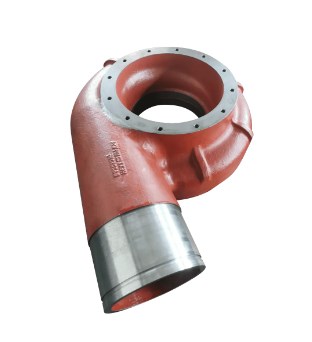
In some special working conditions, the pump body surface may also require further surface treatments such as spraying, heat treatment, or electroplating to improve its corrosion resistance and wear resistance. Through these post-processing techniques, the service life of the pump body can be effectively extended, and its reliability in harsh environments can be improved.
Cast pump bodies are widely used in various industrial fields, especially in the petroleum, chemical, power, and water treatment industries, where cast pump bodies, as key components, perform important tasks. The requirements for cast pump bodies vary in different fields, but generally, they require excellent wear resistance, corrosion resistance, and high strength.
In the petrochemical industry, pump bodies usually need to withstand high-temperature and high-pressure environments and come into contact with various chemical substances. Therefore, cast pump bodies must be made of corrosion-resistant materials, such as stainless steel and alloy steel, to ensure that the pump body can operate stably under extreme working conditions. In the power industry, especially in thermal and hydroelectric power plants, pump bodies need to operate under high load and high pressure for extended periods. Therefore, the strength and rigidity of the pump body are crucial. Cast pump bodies require high compressive strength and fatigue resistance to ensure that the pump system does not fail during long-term operation.
The water treatment industry has high requirements for the corrosion resistance of cast pump bodies, especially for pumps used to treat acidic and alkaline wastewater. In these applications, cast pump bodies need to be made of highly corrosion-resistant materials and have a long service life.
As an indispensable core component of pumping equipment, the design and manufacturing process of cast pump bodies directly affect the performance and service life of the pump system. From design to casting and subsequent applications, every aspect of the cast pump body is crucial. With the continuous development of the industrial sector, the requirements for pump bodies are constantly increasing, and casting processes and material selection are constantly innovating.
Common materials for cast pump bodies include cast iron, cast steel, stainless steel, and various alloy steels. These materials have good castability, wear resistance, and corrosion resistance, meeting the needs of different working conditions.
Surface treatment methods for cast pump bodies include spraying, heat treatment, and electroplating. These treatment methods can improve the corrosion resistance, wear resistance, and aesthetics of the pump body, extending its service life.
The strength of cast pump bodies is ensured by selecting appropriate materials, precise casting processes, and reasonable post-treatment methods. During the casting process, the fluidity of the molten metal must be controlled to avoid defects such as bubbles and pores.
Cast pump bodies require the use of special high-temperature and high-pressure resistant alloy materials, such as alloy steel and stainless steel, and strict quality control during the manufacturing process to ensure that the pump body has sufficient strength and rigidity.
 No. 16 Dayuanli Road, Yunting Street, Jiangyin City, Jiangsu Province, China
 +86-13404286222 / +86-13404286222
 +86-510-86668678
 hmjxboss@gmail.com
Copyright © Jiangyin Huanming Machinery Co., Ltd. All Rights Reserved.Custom Large Components Mechanical Processing Manufacturers

 English
 中文简体
中文简体 русский
 日本語
日本語 Español