-

+86-13404286222
-

hmjxboss@gmail.com

INQUIRE NOW

+86-13404286222
hmjxboss@gmail.com
INQUIRE NOW
In modern mechanical engineering and manufacturing industries, compressors are crucial equipment widely used in petroleum, natural gas, chemical, and power generation fields. The compressor shaft rotor, one of the core components of a compressor, directly affects the performance and operational stability of the equipment. The design and manufacturing of large compressor shaft rotors require not only precise technical requirements but also strict quality control.
The main function of a large compressor shaft rotor is to drive the impeller or other related components inside the compressor through rotation, thereby achieving the compression of air, gas, or other fluids. Its stability and performance play a crucial role in the efficiency and lifespan of the entire compressor. The compressor shaft rotor must withstand enormous working loads and operate stably under harsh conditions such as high speed, high temperature, and high pressure. Therefore, the design requirements for the shaft rotor are extremely high, requiring consideration of multiple factors such as structure, materials, and processing accuracy.
Large compressor shaft rotors typically require high strength, high wear resistance, good thermal stability, and corrosion resistance. Therefore, high-performance materials such as alloy steel, special steels, and titanium alloys are commonly used. These materials can effectively withstand the enormous centrifugal force, thermal expansion, and wear generated during high-speed rotation of the rotor, thus ensuring the long-term stable operation of the equipment. Furthermore, material selection must also consider the specific operating environment of the compressor, such as high or low temperature environments, and whether it comes into contact with corrosive gases, as these factors will affect material selection.
The structural design of the shaft rotor is crucial in determining its performance and service life. The design needs to comprehensively consider factors such as the rotor's geometric shape, structural strength, and stress distribution to ensure that it can withstand various complex mechanical forces under high load and high-speed rotation. Typically, the diameter and length of the rotor shaft are optimized according to specific application requirements, while the mass and density of the rotor also need to be ensured through precise calculations and testing to meet design standards. In addition, the balance design of the shaft rotor is extremely important; an unbalanced rotor can lead to equipment vibration, noise, and even damage, thus affecting the operating efficiency of the compressor.
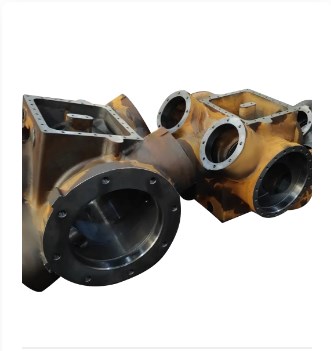
The manufacturing of large compressor shaft rotors requires high-precision processing techniques, especially in surface treatment and heat treatment of the shaft. Through modern technologies such as CNC machine tools, laser processing, and precision casting, the shaft rotor can achieve extremely high dimensional accuracy and surface finish. In addition, heat treatment processes such as quenching, tempering, and nitriding can effectively improve the hardness and wear resistance of the material, extending the service life of the shaft rotor.
The dynamic characteristics of large compressor shaft rotors are particularly important during high-speed operation. Rotor imbalance can lead to equipment vibration, structural fatigue, and even serious problems such as bearing damage. To ensure the stability of the rotor during operation, strict balancing tests and adjustments must be performed during the manufacturing process. Generally, a dynamic balancing machine is used to precisely adjust the rotor, ensuring its balance at different rotational speeds, thereby reducing equipment failure rates and improving work efficiency.
Since large compressor shaft rotors usually operate at high speeds, this places higher demands on the stability of the shaft. During high-speed rotation, the rotor may be affected by external factors such as temperature, airflow, and gas pressure, leading to thermal expansion and deformation. This requires precise calculation of the rotor's temperature gradient, stress distribution, and material thermal expansion characteristics during the design phase. In addition, effective cooling and lubrication measures are needed to ensure that the rotor can maintain stable operation in high-temperature environments.
Vibration and noise are two common problems encountered during the operation of large compressor shaft rotors. Because the rotor generates significant centrifugal force during high-speed rotation, if there is imbalance or design defects, it can cause severe vibration and even affect the lifespan of the equipment. Therefore, strict requirements must be placed on the dynamic balance of the rotor, the matching of the bearings, and the tightness of all connecting parts during the design phase. At the same time, using high-performance vibration damping materials and optimized structural design can also effectively reduce noise and vibration.
To extend the service life of large compressor shaft rotors, regular maintenance and inspection are crucial. During the operation of the equipment after commissioning, the rotor's balance, bearing wear, lubrication system effectiveness, and surface damage should be checked regularly. If any abnormalities are detected, corrective measures should be taken promptly to prevent minor malfunctions from escalating into more serious mechanical failures. Furthermore, regular inspections such as dynamic balancing tests, temperature monitoring, and vibration monitoring can help identify potential risks in advance, thus preventing major failures.
With the continuous advancement of compressor technology, the design and manufacturing of large compressor shaft rotors will face new challenges. High efficiency, energy saving, and environmental protection will become new design goals, and more advanced materials, manufacturing technologies, and intelligent monitoring methods will play a greater role in the design and manufacturing process of rotors. With the development of intelligent technology, real-time monitoring, fault warning, and self-repair systems for rotor operation will gradually become widespread, providing more reliable guarantees for the long-term stable operation of compressors.
Common faults of large compressor shaft rotors include bearing wear, rotor imbalance, excessive vibration, high temperature, and shaft surface damage. These faults may be caused by design defects, insufficient processing accuracy, improper operation, or long-term operation.
Methods to extend the service life of shaft rotors include regular maintenance and inspection, maintaining good lubrication and cooling systems, ensuring rotor dynamic balance, optimizing operating conditions, and using high-quality materials and manufacturing processes.
The balance of the rotor can be detected through professional dynamic balancing testing equipment. If the test results show that the rotor has an imbalance problem, it will lead to increased vibration, which may cause damage to other components of the compressor.
Yes, the design of the shaft rotor needs to be adjusted according to the operating environment of the compressor. For example, in high-temperature and high-pressure environments, special high-temperature alloy materials are required, while in corrosive gas environments, anti-corrosion design needs to be considered.
 No. 16 Dayuanli Road, Yunting Street, Jiangyin City, Jiangsu Province, China
 +86-13404286222 / +86-13404286222
 +86-510-86668678
 hmjxboss@gmail.com
Copyright © Jiangyin Huanming Machinery Co., Ltd. All Rights Reserved.Custom Large Components Mechanical Processing Manufacturers

 English
 中文简体
中文简体 русский
 日本語
日本語 Español