-

+86-13404286222
-

hmjxboss@gmail.com

INQUIRE NOW

+86-13404286222
hmjxboss@gmail.com
INQUIRE NOW
Compressors, as indispensable power devices in industry, are widely used in air conditioning, refrigeration, pneumatic tools, and other fields. The Casting Of Compressor Housing directly affects the performance and reliability of the compressor.
The compressor housing is the external structure of the compressor. It supports various internal components, including rotors, pistons, and bearings, and operates under high pressure and low temperature conditions. Its main function is to ensure the stable operation of internal components while withstanding external mechanical shocks, thermal expansion and contraction, and corrosion from various media. The casting requirements for the housing not only need to meet strength, hardness, and durability, but also require high precision and good surface finish to ensure the long-term stable operation of the compressor.
During the manufacturing process, the compressor housing needs to possess the following important characteristics:
The casting process of the compressor housing is crucial to ensuring its structural strength and dimensional accuracy. Common casting processes include sand casting, precision casting, and aluminum alloy casting. Each process has its applicable characteristics and advantages, and choosing the appropriate process can significantly improve production efficiency and reduce costs.
Sand casting is a traditional and commonly used casting method, suitable for mass production of compressor housings. Its biggest advantage is that the mold making is simple and the cost is low, and it can cast relatively complex shapes. However, the disadvantage of this process is that the surface accuracy is low, and the castings may require subsequent machining to meet accuracy requirements.
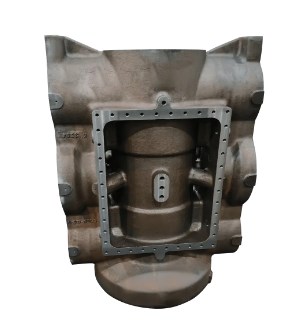
Precision casting can provide higher casting accuracy and is suitable for compressor housings requiring high precision and thinner wall thicknesses. By using wax molds or other materials to make the molds, higher casting accuracy and better surface quality can be achieved. Precision casting is suitable for high-end or small-batch production of compressor casings. Although the cost is higher, it can effectively improve product performance.
For compressor casings requiring lightweight design, aluminum alloy casting is a common choice. Aluminum alloys not only have good corrosion resistance but also have a low density, effectively reducing the overall weight of the compressor. Aluminum alloy casings are widely used in high-efficiency and energy-saving compressors.
The material selection for compressor casings is crucial to their performance. The physical and chemical properties of different materials directly determine the compressive strength, temperature resistance, and corrosion resistance of the compressor casing. Common compressor casing materials include cast iron, aluminum alloy, magnesium alloy, and copper alloy.
Due to its good castability and high strength, cast iron is commonly used to manufacture high-power compressor casings. The advantages of cast iron are its lower cost and good machinability, but its high density and brittleness may limit its application in some lightweight compressors.
Aluminum alloy is one of the commonly used materials for modern compressor casings, especially in applications requiring lightweight and strong corrosion resistance. Aluminum alloy has a low density, effectively reducing the overall weight of the compressor, and also possesses good corrosion resistance, making it suitable for refrigeration equipment and small compressors.
Magnesium alloy is an emerging lightweight material with similar characteristics to aluminum alloy, but with an even lower density, further reducing the weight of the compressor. Magnesium alloy has poor corrosion resistance, so special anti-corrosion treatment is required.
Copper alloy has excellent thermal conductivity and corrosion resistance, making it suitable for compressor casings that need to withstand high temperatures or humid environments. The disadvantages of copper alloy are its higher cost and relatively heavier weight, so it is less common in lightweight designs.
After casting, the compressor casings need to undergo rigorous quality inspection to ensure they meet design requirements. Common inspection methods include ultrasonic testing, X-ray testing, magnetic particle testing, and liquid penetrant testing. These inspection methods can effectively detect defects such as cracks, pores, and inclusions that may exist during the casting process, thus ensuring product quality.
This method uses ultrasonic waves to detect internal defects in materials, particularly in cast iron and aluminum alloy compressor casings, accurately identifying tiny internal cracks or pores.
X-ray testing is suitable for inspecting the internal structure of compressor casings, accurately identifying defects, and is especially effective for complex-shaped castings.
This method involves applying magnetic powder to the surface of the casting and using changes in the magnetic field to detect surface cracks and defects. This method is suitable for cast iron compressor casings.
This method uses a liquid penetrant to penetrate the surface of the casing, revealing defects on the surface and helping to detect tiny cracks and pores.
With continuous technological advancements, compressor casing casting processes and material selection are constantly innovating. From more efficient casting techniques to more environmentally friendly and lightweight materials, future compressor casings will focus more on balancing performance and cost. Simultaneously, with the development of intelligent manufacturing and automation technologies, the production efficiency and product consistency of compressor casings will be further improved.
Compressor casings need to withstand high pressure and drastic temperature changes, so materials with high strength, pressure resistance, and high-temperature resistance must be selected to ensure the stability and long-term reliability of the compressor.
When choosing a casting process, consider the size, shape, accuracy requirements, and production volume of the compressor casing. For large-volume production, sand casting is more economical; for high-precision and complex-shaped products, precision casting is a more suitable choice.
Aluminum alloy is suitable for compressor casings that require lightweight and corrosion resistance, while cast iron is more suitable for high-power compressors with higher pressure requirements. The choice of material should be determined based on specific applications and performance needs.
Common quality inspection methods include ultrasonic testing, X-ray testing, magnetic particle testing, and liquid penetrant testing, aimed at checking for defects such as cracks and pores during the casting process.
 No. 16 Dayuanli Road, Yunting Street, Jiangyin City, Jiangsu Province, China
 +86-13404286222 / +86-13404286222
 +86-510-86668678
 hmjxboss@gmail.com
Copyright © Jiangyin Huanming Machinery Co., Ltd. All Rights Reserved.Custom Large Components Mechanical Processing Manufacturers

 English
 中文简体
中文简体 русский
 日本語
日本語 Español