-

+86-13404286222
-

hmjxboss@gmail.com

INQUIRE NOW

+86-13404286222
hmjxboss@gmail.com
INQUIRE NOW
As equipment manufacturing evolves towards high-end, precision, and large-scale production, the ability to stably and efficiently process large, complex structural components directly determines a company's competitiveness in aerospace, rail transit, energy equipment, and construction machinery. The rapid pace of technological iteration in the industry, coupled with digitalization and intelligence, is reshaping traditional processing logic, giving this field unprecedented potential.
The processing process not only tests the rigidity and stability of the equipment but also places higher demands on process planning accuracy, tool path strategies, and temperature control systems. These components are usually the basic carriers of equipment systems, and their precision level, surface quality, and structural integrity directly affect the performance of the entire machine, especially under high-speed operation or high-load environments.
With the upgrading of the industrial chain, large component mechanical processing no longer relies solely on traditional cutting capabilities but is gradually shifting towards composite processing, multi-dimensional collaborative processing, and intelligent scheduling. By building highly flexible processing units, companies can shorten cycles while further improving production stability, forming a more robust supply chain capability.
The continuous spatial trajectory control capabilities of machine tools are constantly improving, ensuring smoother and more stable processing of complex curved surfaces and deep cavity structures. During the processing, the system real-time identifies the load state and automatically adjusts the cutting posture to reduce the risk of deformation. The popularization of composite processing technology further enhances production coordination capabilities, integrating multiple functions such as turning, milling, and drilling on the same platform, making the processing path more compact and smooth, and reducing the accumulation of errors caused by clamping.
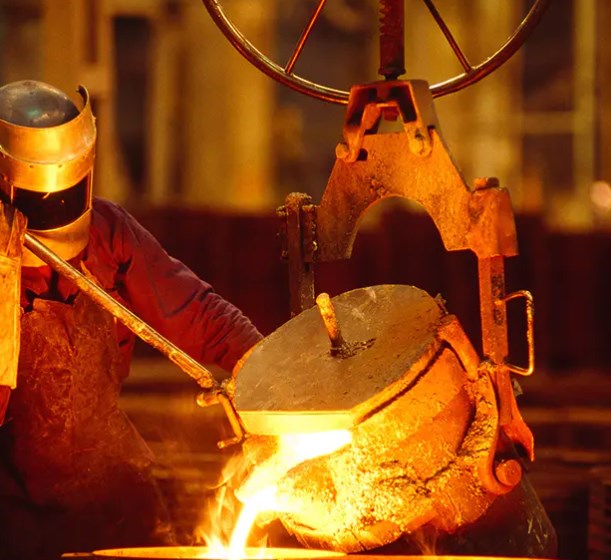
The supporting tool technology is also constantly evolving. Through the integration of materials science and coating technology, tools have better performance in wear resistance and stability. The overall energy efficiency of the processing system, the geometric accuracy control of large components, and the microstructural quality of the processed surface are all continuously optimized under the support of this technological system.
During the machining process, the system collects multi-dimensional data such as vibration, temperature, and tool wear in real time through sensors. This data is then analyzed using algorithmic modeling to determine the machining status and enable predictive adjustments. Digital twin technology elevates process planning to a higher level of precision, simulating the entire machining process through virtual models, allowing for optimization before the equipment even begins operation, thus significantly reducing risks.
The intelligent control system, relying on high-speed data processing capabilities, achieves dynamic compensation of machine tools, structural deformation prediction, and precise positioning control. This ensures that large components maintain a stable geometric shape during machining, reducing error propagation. The overall machining ecosystem is shifting from an experience-based approach to a data-driven one, enabling companies to build more intelligent and controllable production capabilities.
Machine tool structures are gradually adopting more efficient drive systems, reducing ineffective power consumption through real-time monitoring of energy usage. In process design, cutting fluid management is also becoming more environmentally friendly, resulting in a cleaner machining environment. Through refined process path optimization, the material utilization rate of the entire production chain is significantly improved, further reducing resource waste.
Green manufacturing not only enhances companies' ability to adapt to regulations and market trends but also drives the machining system towards a sustainable direction. More and more manufacturing companies are incorporating energy efficiency indicators into equipment selection and project planning, making green practices an indispensable part of large component machining systems.
| Question | Answer |
|---|---|
| Why is machining large components so difficult? | Mainly due to their large size, complex structure, and long process paths, which significantly increase the difficulty of deformation control and precision maintenance. |
| What is the role of multi-axis linkage in large-scale machining? | It enables more flexible spatial trajectory control, making the machining of complex structures smoother and improving overall machining quality. |
| What is the significance of digital technology for large component machining? | It enables process prediction, status monitoring, and intelligent adjustment, making the machining process more controllable and stable, reducing costs and risks. |
| Does green machining affect efficiency? | Modern green manufacturing aims to improve energy efficiency and machining efficiency. It not only does not reduce efficiency but also has a positive impact on production stability. |
 No. 16 Dayuanli Road, Yunting Street, Jiangyin City, Jiangsu Province, China
 +86-13404286222 / +86-13404286222
 +86-510-86668678
 hmjxboss@gmail.com
Copyright © Jiangyin Huanming Machinery Co., Ltd. All Rights Reserved.Custom Large Components Mechanical Processing Manufacturers

 English
 中文简体
中文简体 русский
 日本語
日本語 Español