-

+86-13404286222
-

hmjxboss@gmail.com

INQUIRE NOW

+86-13404286222
hmjxboss@gmail.com
INQUIRE NOW
When an oil well blowout preventer body exceeds 800 kg and must hold back 15,000 psi of well pressure, the choice between casting and forging is not academic. It determines whether the part survives a decade of hydrostatic testing and field service or fails on the first pressure cycle. A sand-cast version might look sound on the outside, but coarse dendritic grains and centerline shrinkage inside the metal can compromise pressure integrity in ways that surface inspection does not reveal. For procurement teams at equipment manufacturers, the difference comes down to one question: what mechanical properties does the service load actually demand?
Direct answer: Casting builds a component by solidifying liquid metal into a mold, while forging reshapes a solid billet under compressive force. That single difference produces unique grain structures that govern every subsequent mechanical property.
Molten metal is poured into a sand or investment mold. Grains nucleate on mold walls and grow toward the center, forming dendritic or columnar structures. Large castings often develop centerline shrinkage, micro-porosity, and coarse grains that act as internal stress raisers.
A heated billet is pressed between dies or open tools. Existing grains are fractured and recrystallized into fine equiaxed structures during deformation. Flow lines follow the part contour, creating a metal grain flow that aligns with the service stress trajectory.
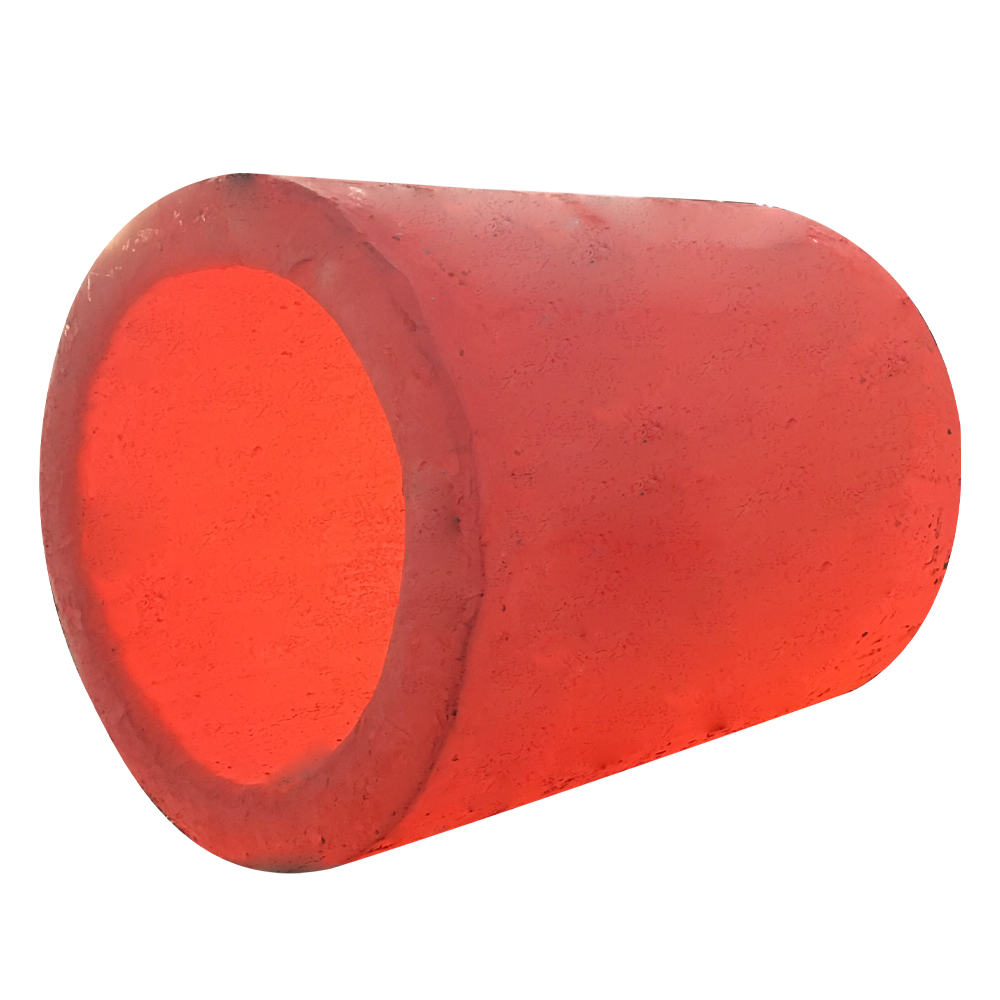 Forged and Cast Metal Parts Manufacturing ServicesForging refines grain structure and aligns flow lines with service stresses, enhancing toughness and fatigue resistance. Casting offers complex shapes at lower cost, but internal defects may limit performance. This manufacturer provides both processes to suit different component requirements.View Product →
The nominal composition may be identical between the two routes, but the local microstructure inside a 2-ton casting can vary significantly from the surface to the center. This variation is the reason castings need radiographic testing; internal defects are real and they cluster where the stress is highest. Forgings, by contrast, have cleaner grain boundaries without film-type inclusions or gas porosity, and their through-thickness impact toughness is correspondingly higher.
In practice, the difference manifests as a measurable performance gap. A forged 42CrMo4 shaft rotor typically reaches 900 MPa tensile strength with 12% elongation, while the same alloy cast might plateau at 700 MPa with 6% elongation. That gap is the property dividend of mechanical grain refinement.
For a deeper look into process history, tooling design, and operational differences between these two routes, see our in-depth article on metal shaping techniques.
Direct answer: Forged large components consistently outperform cast components in yield strength, impact toughness, and fatigue life, while cast components offer superior dimensional flexibility and lower cost at complex geometries.
The data below reflects typical ranges for carbon and alloy steel large components, not laboratory test coupons. In real production, properties vary with section size, heat treatment, and the specific supplier's process control. A 500 kg casting and a 5-ton casting in the same grade will not behave identically.
| Property | Casting | Forging | Typical difference |
| Tensile strength | 400-700 MPa | 500-900 MPa | Forging +15-30% |
| Yield strength | 250-450 MPa | 350-650 MPa | Forging +20-40% |
| Elongation | 5-15% | 10-25% | Forging +30-50% |
| Impact toughness | 20-50 J | 40-100 J | Forging +50-100% |
| Fatigue life | 10^5-10^6 cycles | 10^6-10^7 cycles | Forging 5-10x |
| Dimensional precision | +/-0.5-1.5 mm | +/-0.1-0.5 mm | Forging tighter |
Take the fatigue life row as the most practical example. A compressor housing casting designed for gas compression service typically lasts 10^5 to 10^6 pressure cycles before a crack initiates at an internal porosity site. The same component in forged material withstands 10^6 to 10^7 cycles. When the service interval is tied to a maintenance schedule, selecting the right process can double or triple the time between overhauls.
For a 2-ton compressor cylinder, forging has a higher upfront cost. But if the forged cylinder extends the service interval from 2,000 hours to 6,000 hours, the total cost of ownership drops even though the procurement price goes up. This is the conversation that procurement teams and design engineers should have before the RFQ goes out.
Direct answer: Casting is the optimal choice when complex internal geometry, integrated function, or total cost reduction outweighs the mechanical property deficit.
Large compressor cylinders, pump bodies, gearbox housings, and machine tool structures are classic candidates for casting. These components often contain internal water jackets, gas passageways, stiffening ribs, and mounting bosses that would take multiple forgings plus welding to replicate. The welding itself creates additional stress concentration and distortion, so the cast one-piece design is frequently the safest technical option.
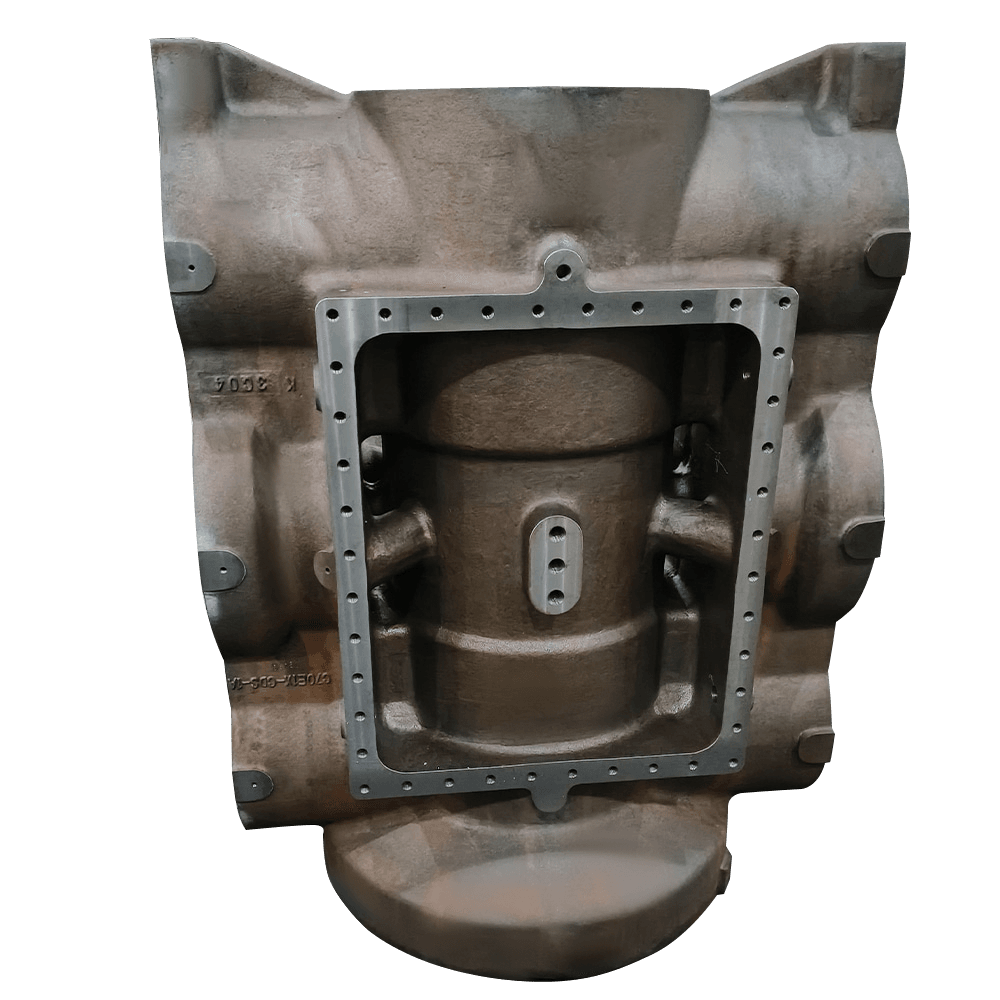 Casting of Compressor Housings and Large ComponentsComplex internal structures like water jackets and passageways are cast in one piece, avoiding multi-part welding and associated stress. Cast iron also adds vibration damping, benefiting compressor cylinders and machine tool beds by reducing transmitted pulsation and improving rigidity.View Product →
Cast iron and cast steel also provide inherent vibration damping that forged steel does not. For a compressor cylinder that must reduce transmitted pulsation, that damping property has measurable value in downstream piping and instrumentation. The same advantage appears in lathe chucks and machine tool bed castings, where the equipment's own rigidity helps control accumulated errors.
Production costs also favor casting in this category. A sand mold for a 1-ton compressor housing might cost USD 3,000-8,000 depending on the pattern complexity, while a forging die set for the same part can cost USD 40,000-120,000 before the first billet is heated. For low-to-medium volume runs, the die cost alone tells you which process makes sense.
Direct answer: Forging is mandatory when cyclic heavy loads, high pressure, or safety certification requirements dictate through-thickness mechanical integrity that a casting cannot guarantee.
Oil well blowout preventer bodies, high-speed transmission gears, universal bearing seats, and wind turbine main shafts all fall into this category. An API 16A blowout preventer body must withstand sudden pressure spikes without crack propagation. Forged material provides the required Charpy impact toughness in the through-thickness direction, a property that a large casting simply cannot deliver consistently.
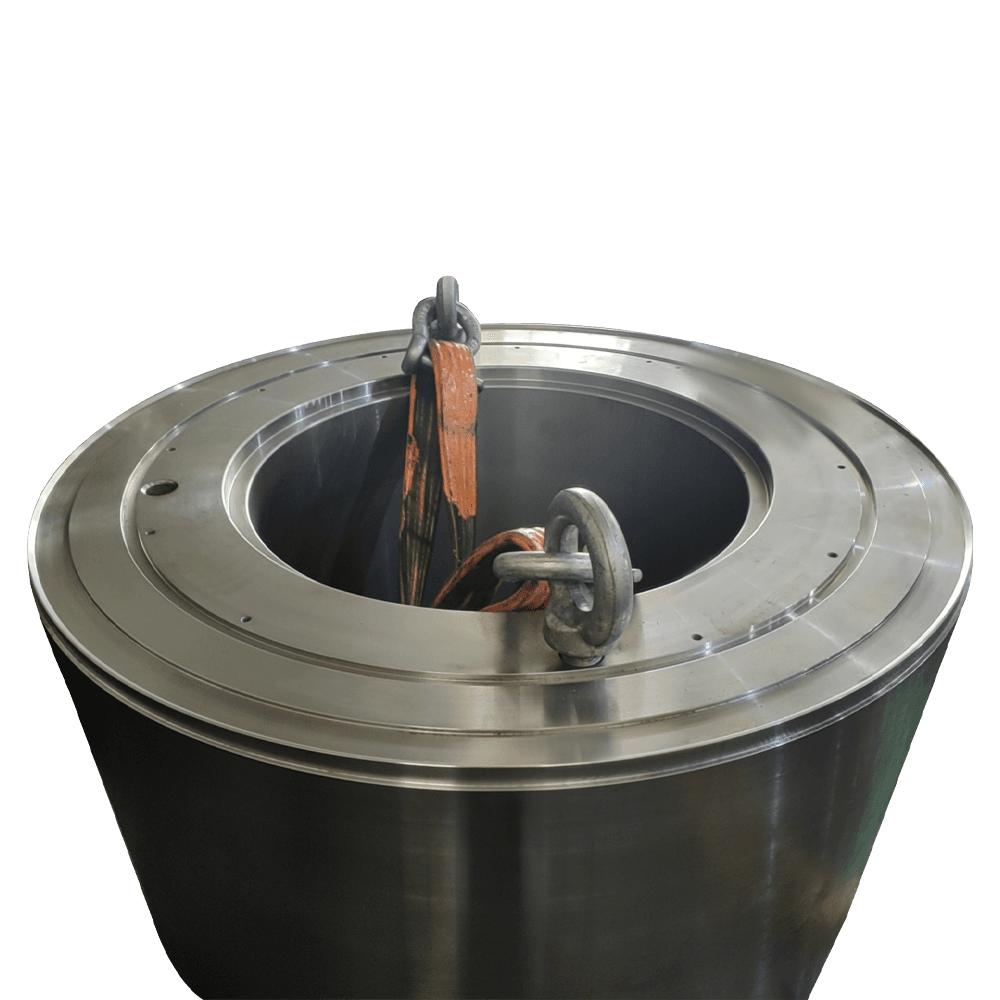 High-Speed Transmission Gears and PinionsForged gears exhibit grain flow along tooth profiles, resisting crack initiation under high-speed reversing loads. For high-RPM, high-power transmission, forged material provides necessary through-thickness toughness and fatigue life, outperforming cast alternatives in demanding service conditions.View Product →
For a high-speed transmission gear running at 3,000+ RPM and transmitting 500 kW, the gear teeth are subjected to reversing bending loads millions of times. Forging aligns grain flow along the tooth profile, resisting crack initiation. The same design in cast material would fail in a fraction of the service time.
Safety codes reinforce the engineering logic. API standards for blowout preventers, ASME pressure vessel rules, and ISO certification criteria all specify wrought or forged material for pressure-retaining critical components. In many cases, the specification itself eliminates the casting option before any quotation is requested.
Direct answer: Huanming Machinery evaluates each large component against service load, safety classification, and dimensional complexity, then recommends casting or forging and delivers the finished machined part from either route.
Established in Jiangyin, Jiangsu in 2010, Huanming Machinery produces approximately 2,000 tons of large components per year, sells to more than 100 countries, and supports a team of over 150 people. The company maintains both casting and forging capabilities, plus welding, heat treatment, and precision machining on horizontal machining centers, gantry machines, and CNC boring mills.
This dual-capability approach changes the supplier conversation. Instead of a buyer coordinating between a casting foundry and a forging shop, Huanming handles material selection, process recommendation, tooling, and finish machining under one quality system. For a component like a metallurgical coil shaft accessory or a marine hydraulic coupling, this simplifies procurement, reduces lead time, and eliminates the risk of responsibility disputes between two vendors.
Huanming also maintains a dedicated special materials program covering duplex stainless steel 2205, Haynes 188, and Inconel 718, supplied as bars, forgings, flanges, and shafts. These materials are required when large components face corrosive media, high temperatures, or extreme pressure in oil and gas, marine, and chemical processing environments. The material program helps customers solve two problems at once: relying on one supplier for both the process route and the material.
For a practical look at how achieving high precision in large components is executed through CNC boring, vertical turning, and gantry milling, the detailed walkthrough covers the exact process sequence.
Casting usually costs 30-50% less per kilogram for complex, large geometries because the mold process avoids massive forging dies and multi-step deformation. For simpler shapes that can be forged with standard tooling, the cost gap narrows substantially. The break-even point depends on the part's complexity, production volume, and whether a forging die can be shared across multiple products.
Forging provides significantly better fatigue resistance due to its fine equiaxed grain structure and aligned grain flow. Cyclic-loaded cast components typically fail after 10^5 to 10^6 cycles, while forged equivalents reach 10^6 to 10^7 cycles. In large parts, the difference is amplified because casting defects scale with section size.
Yes, cast steel and cast stainless steel are used in pressure equipment, but the pressure rating must account for lower through-thickness properties. Safety-critical equipment like blowout preventers typically require forged bodies per API standards. A cast part can be a viable option for less critical pressure components when non-destructive testing confirms the internal quality.
Both require ultrasonic testing and magnetic particle inspection for surface and subsurface defects. Castings additionally need radiographic testing for internal shrinkage and porosity. Forgings require hardness testing and, for critical parts, mechanical testing from the same heat treatment lot. Huanming's inspection protocol includes all of these plus dimensional verification on a calibrated coordinate measuring machine.
 No. 16 Dayuanli Road, Yunting Street, Jiangyin City, Jiangsu Province, China
 +86-13404286222 / +86-13404286222
 +86-510-86668678
 hmjxboss@gmail.com
Copyright © Jiangyin Huanming Machinery Co., Ltd. All Rights Reserved.Custom Large Components Mechanical Processing Manufacturers

 English
 中文简体
中文简体 русский
 日本語
日本語 Español