-

+86-13404286222
-

hmjxboss@gmail.com

INQUIRE NOW

+86-13404286222
hmjxboss@gmail.com
INQUIRE NOW
At 650°C, Inconel 718 holds more yield strength than most nickel alloys; at 980°C, Haynes 188 outlasts its nickel rivals in cyclic oxidation; and in seawater, Duplex 2205 delivers pitting resistance that neither nickel-based alloy matches. The practical question is not which of these three is the best, but which one fits your specific operating envelope, load profile, and fabrication route. This guide compares them side by side so you can make that decision with data instead of guesswork.
These three alloys occupy distinct positions on the materials selection map for high-temperature and corrosive service. Each one was developed to solve a specific failure mode.
Superalloys, in this context, are metal alloys engineered to maintain mechanical integrity and surface stability at temperatures above 540°C, where ordinary steels suffer from oxidation and creep. Each of these three grades approaches that challenge from a different metallurgical direction.
Inconel 718 (UNS N07718, W.Nr. 2.4668) is a precipitation-hardenable nickel-chromium alloy strengthened by gamma-prime and gamma-double-prime phases. It delivers high mechanical strength from cryogenic temperatures up to about 650°C, and it is available as forged parts, pipes, tubes, sleeves, and bushings.
Haynes 188 (UNS R30188, GH5188) is a cobalt-nickel-chromium solid-solution alloy. The cobalt matrix gives it exceptional oxidation and sulfidation resistance, plus high thermal-fatigue strength, at continuous service temperatures up to 1095°C.
Duplex 2205 (UNS S32205) is a nitrogen-enhanced ferritic-austenitic stainless steel. Its dual-phase microstructure delivers roughly twice the yield strength of austenitic 316L and superior stress-corrosion cracking resistance in chloride-rich environments.
Choose Inconel 718 when your component carries high mechanical loads at temperatures up to 650°C and you need a forgeable, weldable alloy with predictable heat treatment.
The age-hardening system is the reason Inconel 718 stands out. Gamma-double-prime (Ni3Nb) precipitates form during a two-stage aging treatment — typically 720°C for 8 hours, furnace cool, then 620°C for 8 hours — and push yield strength above 1000 MPa. This makes it a natural choice for turbine disks, high-speed transmission gears, compressor shafts, and heavy-duty fasteners.
Inconel 718 has a clear ceiling. Above roughly 700°C, oxidation becomes the limiting factor. If service temperatures exceed 650°C for extended periods, a cobalt-based alloy such as Haynes 188 should be considered instead.
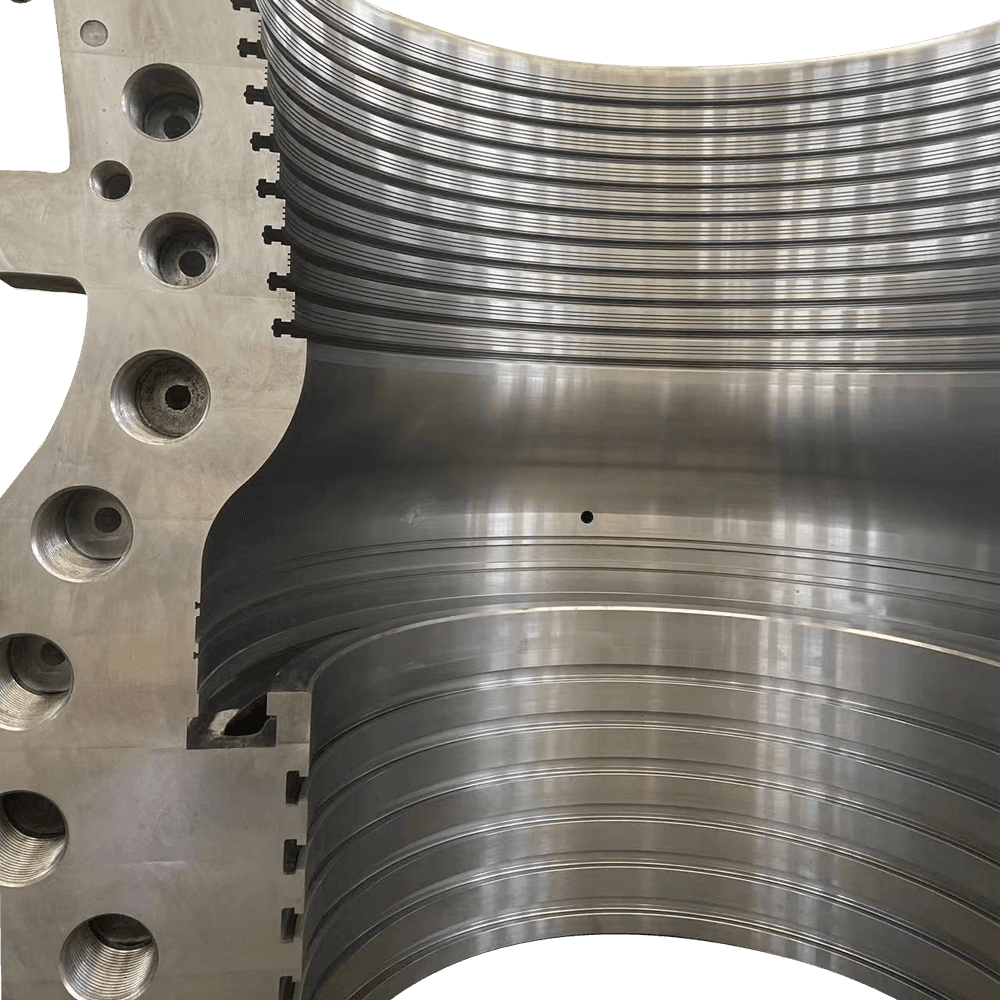 Haynes 188 Cobalt-Based Alloy for High-Temperature ComponentsConsider Haynes 188 when service exceeds 700°C, as it offers better oxidation resistance than Inconel 718. Suitable for combustion environments with sulfur or vanadium at sustained temperatures above 850°C.View Product →
Choose Haynes 188 when your component faces sustained temperatures above 850°C, thermal cycling, or a combustion atmosphere containing sulfur or vanadium.
Haynes 188 contains roughly 39% cobalt, 22% chromium, 14% tungsten, and 22% nickel. The tungsten addition provides solid-solution strengthening, while lanthanum (0.03–0.12%) improves oxide scale adherence. This combination gives excellent resistance to cyclic oxidation and sulfidation at service temperatures up to 1095°C.
Because it is not precipitation-hardened, Haynes 188 maintains ductility after long thermal exposure. That is the key advantage over Inconel 718 in turbine and combustion applications: when a component goes through rapid thermal cycles, the alloy can flex without cracking.
Cost is the primary trade-off. Cobalt remains a supply-constrained, price-volatile element. Parts made from Haynes 188 can cost two to three times as much as equivalent Inconel 718 components — and more if the geometry requires extensive machining.
Choose Duplex 2205 when the primary threat is chloride pitting, stress-corrosion cracking, or hydrogen sulfide, and when service temperature stays below 300°C.
Duplex 2205 is a two-phase stainless steel with roughly 50/50 ferrite and austenite. The balanced microstructure plus nitrogen strengthening gives it a yield strength around 450–550 MPa — approximately twice that of 316L — while retaining good ductility and weldability.
Its corrosion resistance is characterized by the Pitting Resistance Equivalent Number (PREN): PREN = Cr + 3.3(Mo + 0.5N) + 16N. With 21–23% chromium, 2.5–3.5% molybdenum, and 0.08–0.20% nitrogen, Duplex 2205 typically achieves a PREN of 34–36. That places it well above 316L (PREN around 25) and makes it a strong candidate for seawater, chemical, and oil-and-gas process equipment.
The critical constraint is temperature. Long-term exposure above 300°C promotes sigma-phase precipitation and embrittlement. If the component sees sustained service above 300°C, Duplex 2205 is not the right answer — even though its corrosion performance is excellent below that threshold.
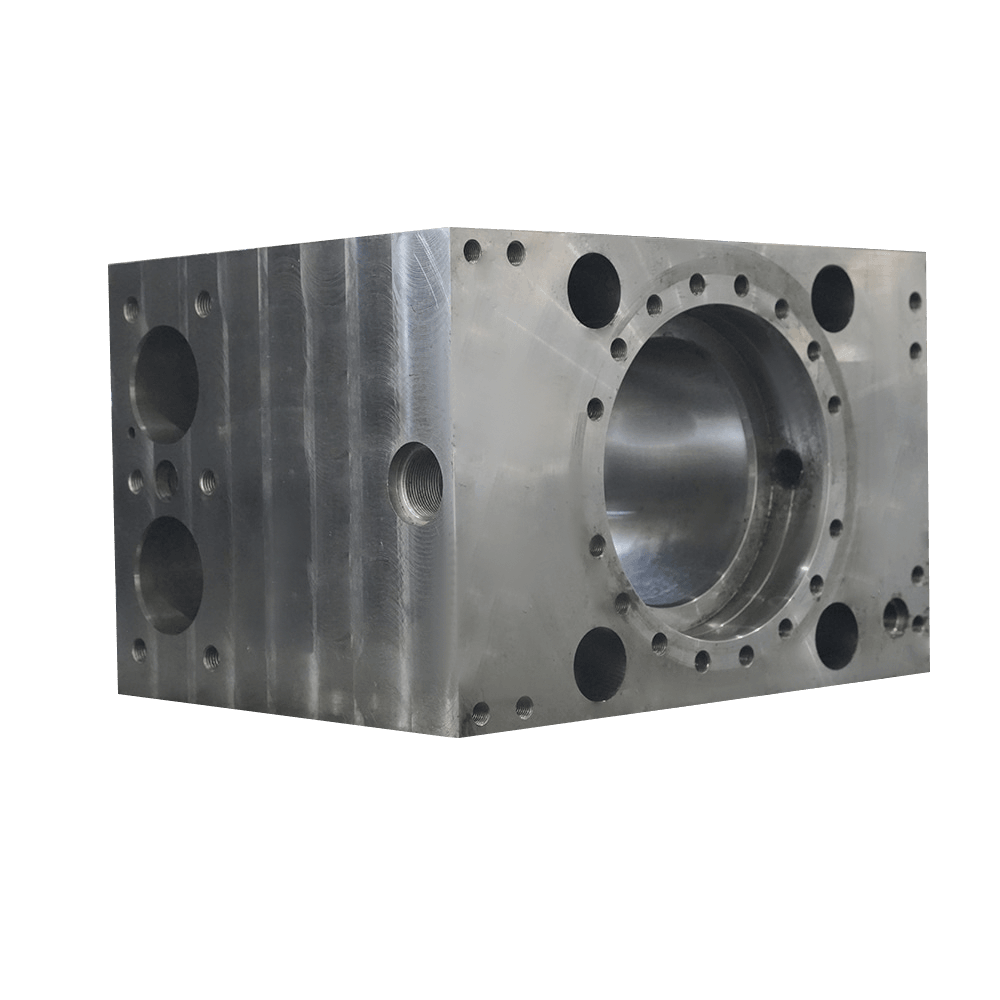 Duplex 2205 Stainless Steel for Corrosive Service Below 300°CDuplex 2205 provides excellent corrosion resistance but is limited to temperatures below 300°C due to sigma-phase embrittlement. It is a viable choice for components in corrosive environments at lower temperatures.View Product →
The table below summarizes the key differences in a format that is easy to reference during a design review.
| Property | Inconel 718 | Haynes 188 | Duplex 2205 |
| Max continuous service temperature | 650°C | 1095°C | 300°C |
| Room-temperature yield strength | About 1034 MPa | About 450 MPa | About 550 MPa |
| Primary strengthening mechanism | Gamma-double-prime precipitation | Solid-solution (cobalt matrix) | Ferrite-austenite dual phase |
| Oxidation resistance at 980°C | Moderate | Excellent | Poor |
| Chloride stress-corrosion cracking resistance | Good | Good | Excellent |
| Relative cost | High | Very high | Medium |
Start with the maximum service temperature, then the corrosive medium, then the mechanical load, then the fabrication route. That order will narrow down the field faster than any alloy chart.
The best alloy on paper will fail in production if it cannot be forged, welded, and machined consistently in large sections.
Inconel 718 is forgeable but has a narrow processing window. It work-hardens rapidly, so machining requires rigid tooling and moderate speeds. The two-stage aging treatment must be followed precisely to achieve the specified yield strength.
Haynes 188 is more forgiving in hot forming, but its cobalt and tungsten content makes it one of the more difficult alloys to machine. Carbide tool grades with high hot hardness and good thermal conductivity are required for economical material removal.
Duplex 2205 needs attention on the welding side. Maintaining the correct ferrite-austenite balance depends on the interpass temperature and heat input. Too much heat can produce an excessive ferrite content and reduce corrosion resistance.
For large components, these constraints become manufacturing challenges. Jiangyin Huanming Machinery Co., Ltd., a large-component manufacturer in Jiangsu, China, processes these material families with heavy forging, casting, and precision machining equipment — including horizontal machining centers and CNC boring machines.
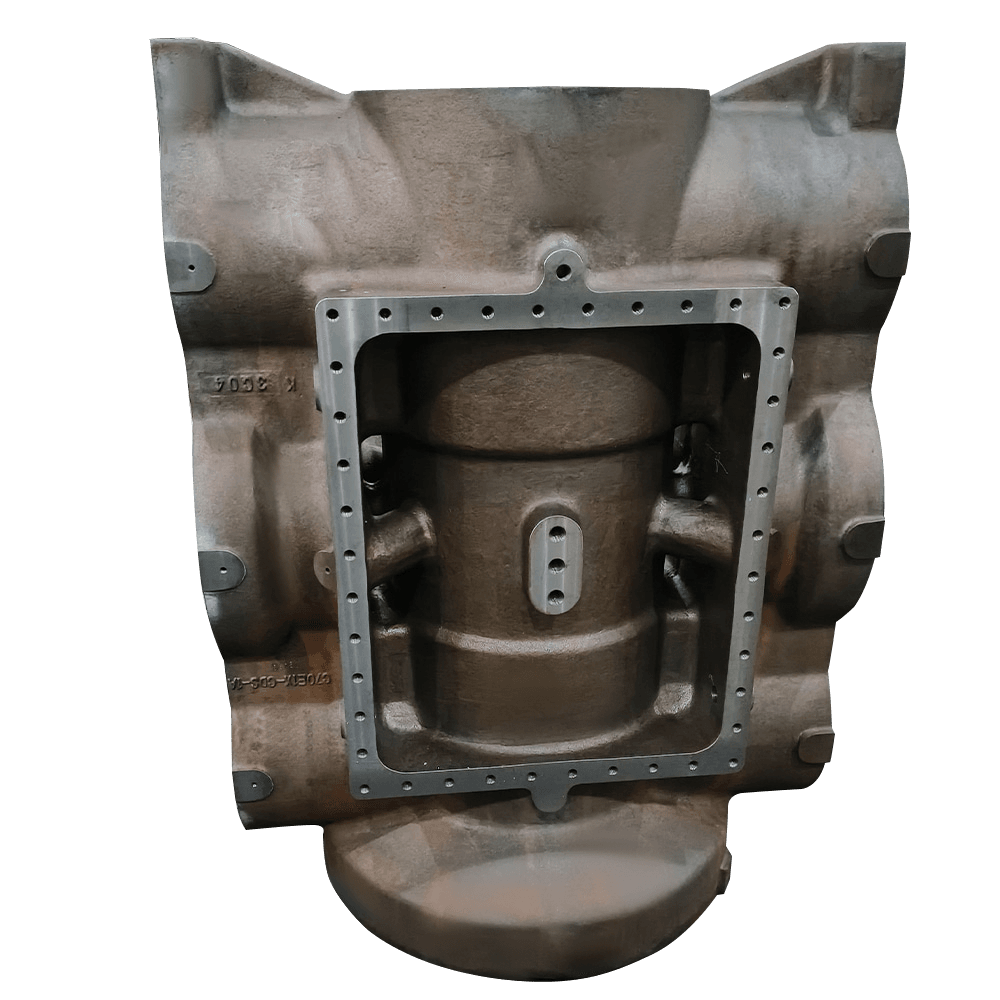 Large Compressor Housing Castings for Heavy-Duty Industrial UseLarge compressor housings are designed for high-intensity loads and continuous operation, using advanced processes. They serve industries like petrochemical and metallurgy, with structural stability and safety features.View Product →
No. Duplex 2205 loses its mechanical integrity above roughly 300°C due to sigma-phase embrittlement. Inconel 718 is engineered for service up to 650°C. If the design temperature exceeds 300°C, Duplex 2205 is not a viable substitute.
The main difference is the matrix and strengthening mechanism. Inconel 718 is precipitation-hardened nickel-based and optimized for high strength at up to 650°C. Haynes 188 is cobalt-based solid-solution strengthened and designed for oxidation resistance at up to 1095°C with better thermal fatigue performance.
Duplex 2205 is the most cost-effective. It provides excellent chloride pitting and stress-corrosion resistance at roughly half the raw material cost of nickel-based alternatives, while delivering twice the yield strength of 316L.
For continuous service, Duplex 2205 is generally limited to about 300°C. Above that, sigma-phase precipitation can cause significant embrittlement and loss of corrosion resistance.
 No. 16 Dayuanli Road, Yunting Street, Jiangyin City, Jiangsu Province, China
 +86-13404286222 / +86-13404286222
 +86-510-86668678
 hmjxboss@gmail.com
Copyright © Jiangyin Huanming Machinery Co., Ltd. All Rights Reserved.Custom Large Components Mechanical Processing Manufacturers

 English
 中文简体
中文简体 русский
 日本語
日本語 Español