-

+86-13404286222
-

hmjxboss@gmail.com

INQUIRE NOW

+86-13404286222
hmjxboss@gmail.com
INQUIRE NOW
When a replacement gear shaft returns from the field with a fracture at the tooth root fillet, the failure face often reveals what mechanical calculations alone cannot explain. Grain flow orientation - the direction in which metal grains align during manufacturing - is the hidden variable that decides whether a forged gear shaft survives millions of stress cycles or fails after only a fraction of that life. Jiangyin Huanming Machinery Co., Ltd. produces both forged and cast gear shaft blanks, and this comparison drives practical sourcing decisions for buyers of large transmission components.
Grain flow orientation is the directional pattern of grain alignment in a metal component, and it directly controls where fatigue cracks begin under cyclic bending loads. When forging deforms a blank, grains elongate along the metal flow path. Casting instead produces an equiaxed crystal structure where grains point in random directions. The practical consequence is that fatigue cracks travel more easily along grain boundaries lying perpendicular to the principal tensile stress.
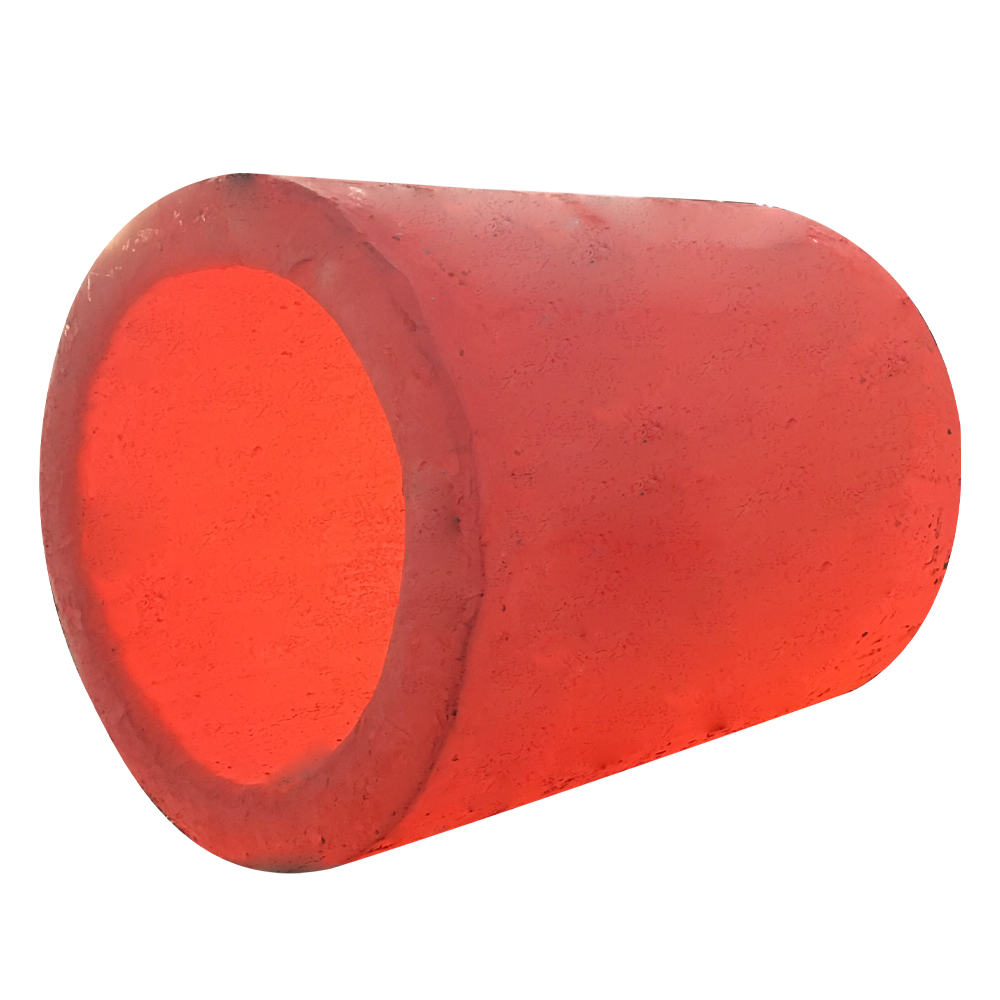 Forging and Casting Parts Processing Services for High-Strength ComponentsThis manufacturer provides both forging and casting processes, producing parts with improved mechanical properties through grain refinement and directional flow, ideal for high-stress applications like gear shafts.View Product →
Die forging or open-die forging plastically deforms metal at high temperature, elongating grains along the die flow direction. This creates a fibrous texture that follows the part contour and delivers superior fatigue resistance at the tooth root. In a forged and cast parts comparison, this directional flow is the main reason forged gear shafts outperform cast blanks under cyclic stress.
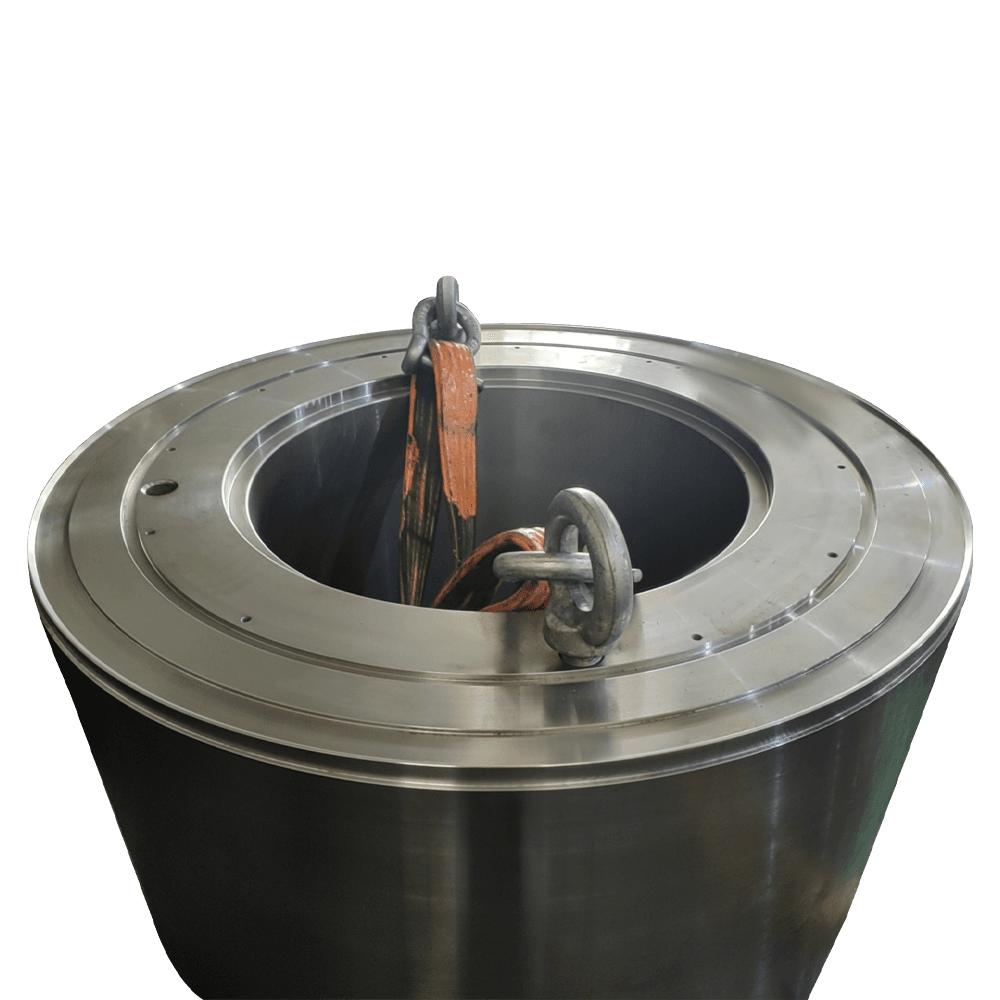 High-Speed Transmission Pinion Manufacturers for Precision Gear SystemsSpecializing in high-speed gears, this supplier uses precision machining and heat treatment to ensure smooth power transmission, low noise, and durability in demanding industrial environments.View Product →
Sand casting solidifies metal from the mold wall inward, creating dendritic grains that are nearly isotropic. No grain line is aligned with the primary stress direction, and micro-shrinkage, gas porosity, and oxide films act as stress concentrators. Casting still wins on cost, complex geometry, and low-volume runs, which is why many gear shafts are cast when fatigue requirements are moderate.
The dendritic structure that forms during solidification carries the same isotropic character in every direction. Dendrites grow in the direction of heat extraction, but in a sand mold for a gear blank, heat extraction is multidirectional, so the final grain orientation is effectively random. Combined with the higher inclusion content, the result is a lower fatigue crack initiation threshold and a shorter propagation phase before final fracture.
Under identical loading and heat treatment, forged gear shafts outperform cast gear blanks by 20-35% in fatigue strength and up to twice in fatigue life, with the advantage concentrated at the tooth root fillet. The table below uses typical values measured on normalized and tempered 42CrMo4 specimens. Test conditions, surface finish, and stress ratio all shift these numbers, but the relative ranking remains consistent.
| Property | Forged gear shaft | Cast gear blank | Difference |
| Fatigue strength at 10 million cycles | 380-420 MPa | 280-330 MPa | +25 to +35% |
| Fatigue life at 400 MPa | 8-9.5 million cycles | 3-4.5 million cycles | +100% |
| Elongation at break | 14-18% | 8-12% | +50% |
| Impact strength at 20 C | 35-45 J | 15-25 J | +70% |
| Grain structure | Directional and fibrous | Equiaxed and dendritic | N/A |
Source: Industry fatigue testing data for normalized and tempered gear shaft materials.
Choose the forged route for high-torque, high-RPM, or safety-critical gear shafts. Choose the casting route for complex geometries, low-volume runs, or moderate fatigue requirements. In the context of high-speed transmission gear manufacturing, the fatigue profile of the application is the deciding factor.
Each criterion changes the answer. For example, a gear shaft for a wind turbine gearbox operates at low RPM and high torque, so a forged route is preferred. A prototype shaft with intricate internal oil galleries, on the other hand, may only be feasible through casting.
Yes. Grain flow orientation is a structural variable, not a temperature-dependent one. At elevated operating temperatures, creep becomes an additional factor and the relative effect is slightly reduced, but directional grain flow still improves fatigue resistance in most gear shaft service conditions.
For the same material grade and heat treatment condition, a forged gear shaft typically shows 20-35% higher fatigue strength and up to twice the fatigue life at stress levels near the endurance limit. The largest difference appears at the tooth root fillet.
No. Heat treatment refines microstructure and improves hardness in both routes, but it cannot change the fundamental grain flow pattern. The inclusion population in casting is a function of melt quality, pouring temperature, and mold design. Even a well-run foundry cannot completely eliminate micro-shrinkage in a gear blank. These are volumetric defects that heat treatment cannot close.
Macroetch testing, ultrasonic inspection, and metallographic cross-sections are the standard verification methods. Macroetching with a dilute acid solution reveals grain flow lines, while ultrasonic testing can detect subsurface defects that affect fatigue life.
 No. 16 Dayuanli Road, Yunting Street, Jiangyin City, Jiangsu Province, China
 +86-13404286222 / +86-13404286222
 +86-510-86668678
 hmjxboss@gmail.com
Copyright © Jiangyin Huanming Machinery Co., Ltd. All Rights Reserved.Custom Large Components Mechanical Processing Manufacturers

 English
 中文简体
中文简体 русский
 日本語
日本語 Español