-

+86-13404286222
-

hmjxboss@gmail.com

INQUIRE NOW

+86-13404286222
hmjxboss@gmail.com
INQUIRE NOW
A 1,200 mm gearbox housing can leave the boring mill holding its bearing bores within 0.02 mm, then lose that accuracy permanently because the casting underneath it was poured with uncontrolled wall thickness and never stress relieved. That gap between foundry capability and machining tolerance is where most gearbox housing problems are actually created.
Gearbox housing manufacturing covers the full chain that turns a pattern and a melt into a load-bearing enclosure for gears, bearings, and shafts: pattern and core making, melting and pouring, heat treatment, rough machining, stress relief, finish boring, and dimensional inspection. Jiangyin Huanming Machinery Co., Ltd., founded in 2010 in Jiangyin, Jiangsu Province, runs that chain under one roof, combining casting and forging with heavy machining on gantry and horizontal machining centers, plus in-house magnetic particle and ultrasonic testing. The company reports 2,000 tonnes of annual output, more than 150 employees, exports to over 100 countries, and machine tool accuracy of 8 microns.
The practical question for buyers and design engineers is not whether a supplier can cut metal. It is whether the supplier controls the casting variables that determine how much metal the machining stage has to remove, and how much movement that stage has to absorb.
The casting stage sets the accuracy ceiling for the finished housing. Wall thickness variation, shrinkage porosity, and residual stress decide whether a housing can still hold an H7 bearing bore after machining, and no machining strategy recovers accuracy the casting never had.
Three casting variables dominate. First, sectional uniformity: adjacent walls should stay within a 3:1 thickness ratio, because a thin wall next to a heavy flange cools at a different rate and pulls that flange out of flat. Second, riser and chill placement, which controls where the last liquid metal solidifies and therefore where shrinkage voids form. Third, stress relief, because a housing rough machined while it still carries casting stress will move 0.1 to 0.3 mm as metal is removed from one side and not the other.
| Material grade | Tensile strength | Typical wall range | Chosen for | Machining note |
| Gray cast iron HT250 / GG25 | 250 MPa | 8 to 40 mm | Vibration damping and cost control in volume housings | Free machining, graphite flakes break chips cleanly |
| Ductile iron EN-GJS-400-18 / GGG40 | 400 MPa, 18% elongation | 10 to 50 mm | Shock loads and low-temperature toughness | Requires nodularity above 85% for consistent tool life |
| Cast steel ZG230-450 / GS-45 | 450 MPa | 15 to 80 mm | High torque paths and welded-on brackets | Full annealing before any finish boring |
| Welded fabrication S355 | 355 MPa | Plate 12 to 60 mm | One-off and prototype housings | Weld sequence controls distortion, not machining |
Six casting requirements decide whether a housing will be machinable at an acceptable cost, and all six should be written into the purchase specification before the pattern is cut, because every one of them becomes expensive to change afterwards.
Machining allowance is the layer of metal deliberately left on a casting surface to be removed during machining. On a large gearbox housing it typically runs 5 to 10 mm per face, enough to clean up draft, distortion, and surface defects without adding unnecessary weight or cutting time.
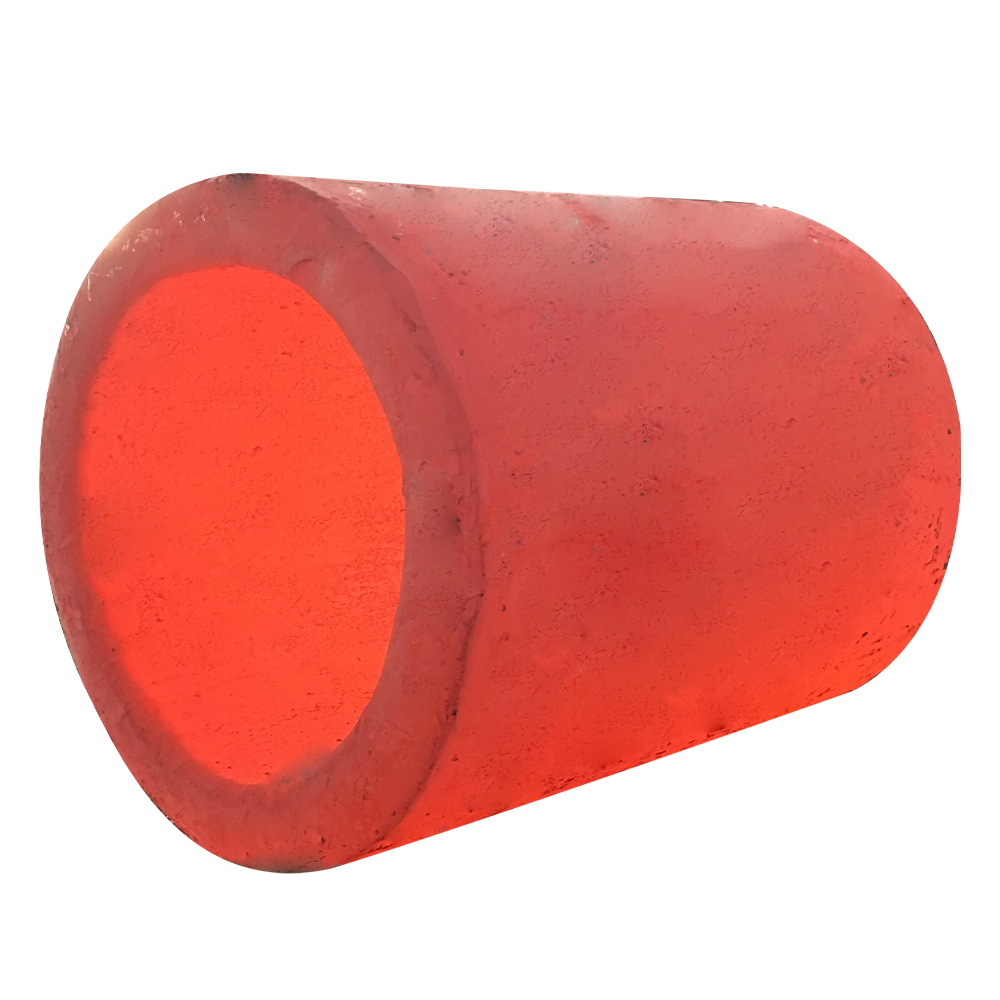 Forging Casting Parts Processing ManufacturersForging and casting are both important metal processing methods in the industry, and they have wide-ranging applications. They have significant differences in terms of...View Product →
Specifications written this way also give the machine shop a defensible baseline. If a bore will not clean up, the conversation moves from opinion to measurement against the agreed allowance.
Bore-to-bore parallelism and shaft center distance control assembly fit far more than bore diameter alone. A housing with individually accurate bores but 0.05 mm of parallelism error will load its bearings unevenly and shorten bearing life long before it shortens gear life.
Datum strategy decides whether those tolerances are reachable at all. The mounting face and a single dowel hole should be established as the primary datum and reused for every operation after rough machining. Bores on four sides of a housing should be cut in one setup on a horizontal machining center wherever part size allows, because each re-fixturing introduces a positioning error that has to be absorbed somewhere in the tolerance stack.
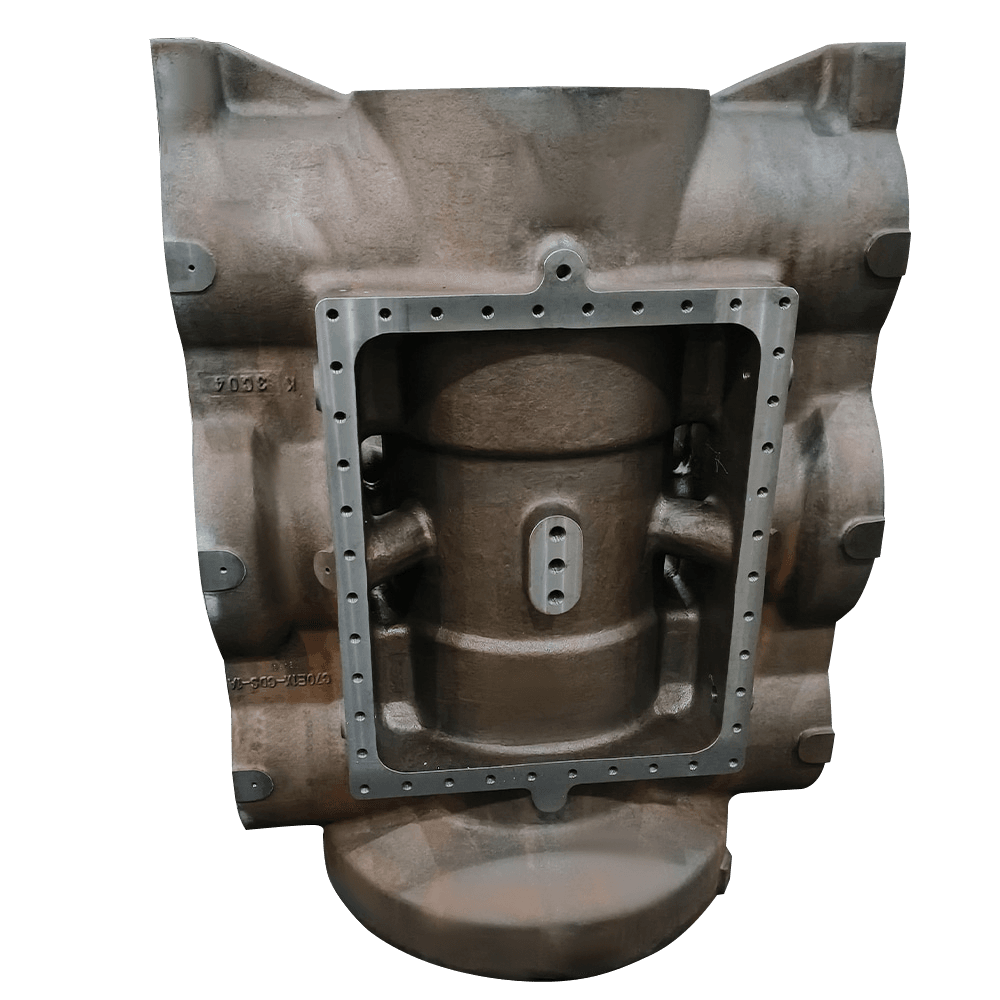 Casting of Compressor Housing ManufacturersLarge compressors usually adopt heavy-duty structural designs, which can withstand high-intensity loads and therefore have strong continuous operation capabilities. Ad...View Product →
Housing-class parts machined on the same equipment, including large compressor cylinders, universal bearing seats, and wind power main shaft flanges, share an identical requirement set: rigid fixturing, thermal stability during long boring cycles, and a measurement plan that mirrors the drawing datum rather than the machine table.
Inspection only proves what already happened, so control points must sit upstream of the finished bore. Six checkpoints cover the majority of defect modes in gearbox housing manufacturing.
The housing is the only part in a gearbox that touches every other part. Its geometry is simultaneously the reference for gear mesh, bearing preload, and lubrication flow, which is why housing accuracy failures rarely stay contained to one component.
Single-source casting plus machining usually removes three to six weeks from a first-article schedule, because the foundry and the machine shop work from one datum, one casting model, and one inspection plan instead of negotiating a handover tolerance.
Material availability belongs in the same decision. Offshore, chemical, and high-temperature gearbox enclosures increasingly specify corrosion-resistant or heat-resistant grades instead of gray iron, and a supplier that already stocks and machines Inconel 718 forgings and duplex 2205 bar removes a second qualification cycle from the program.
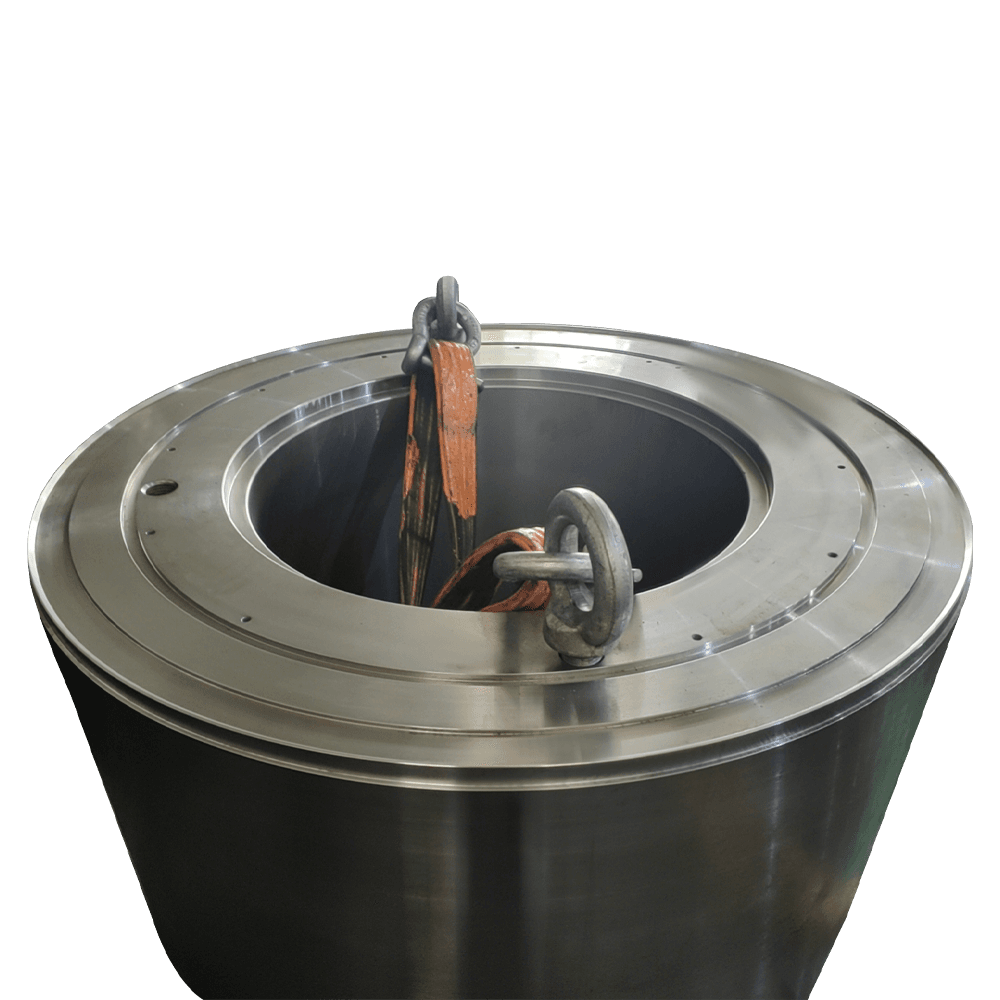 High Speed Transmission Pinion ManufacturersHigh-speed transmission gears are key components used in high-speed rotating mechanical systems. They are designed and manufactured to achieve efficient and smooth pow...View Product →
Mating components should be quoted alongside the housing. Gears, racks, and bearing seats cut to the same datum and inspected against the same plan arrive at assembly with the tolerance stack already accounted for, which is what keeps a gearbox quiet through its warranty period.
Gray cast iron such as HT250 or GG25 remains the default for industrial housings because its graphite structure damps vibration and machines quickly. Move to ductile iron when the housing sees shock loads or low-temperature service, and to cast steel or welded fabrication when torque paths and mounting brackets demand higher tensile strength.
Plan on 5 to 10 mm per face for housings over one meter. The allowance has to cover pattern draft, casting distortion, and surface defects, but excess allowance adds weight and machining time and increases the risk of exposing subsurface porosity during the roughing pass.
A well-controlled process holds shaft center distance within a 0.10 mm band, mounting face flatness within 0.05 mm, bore-to-bore parallelism within 0.03 mm, and bearing bore roundness within 0.015 mm. Achieving those numbers depends more on datum discipline and single-setup boring than on the nominal accuracy of the machine tool.
Expect six to twelve weeks from pattern approval to a machined first article, depending on casting weight and heat treatment cycles. Single-source casting and machining typically saves three to six weeks compared with split sourcing, because rework authority and datum control stay inside one plant.
 No. 16 Dayuanli Road, Yunting Street, Jiangyin City, Jiangsu Province, China
 +86-13404286222 / +86-13404286222
 +86-510-86668678
 hmjxboss@gmail.com
Copyright © Jiangyin Huanming Machinery Co., Ltd. All Rights Reserved.Custom Large Components Mechanical Processing Manufacturers

 English
 中文简体
 русский
 日本語
 Español
