-

+86-13404286222
-

hmjxboss@gmail.com

INQUIRE NOW

+86-13404286222
hmjxboss@gmail.com
INQUIRE NOW
A procurement manager ordering a gas turbine component often sees two similar nickel alloys on the stock sheet: Inconel 718 and Inconel 625. Both are superalloys, but one is precipitation-hardening and the other is solid-solution strengthened. That classification determines whether a part holds 1,170 MPa at room temperature or stays reliable at 980°C, and it changes every production step from forging to final machining. Precipitation-hardening superalloys gain their strength from a controlled heat treatment that forms microscopic gamma-prime and gamma-double-prime precipitates in the matrix. Solid-solution strengthened alloys instead rely on alloying elements dissolved into the crystal lattice, creating strain that resists dislocation movement. No aging step is needed, and no precipitates appear or grow in service. In practice, the choice comes down to maximum component strength at moderate temperature versus reliable performance at extreme temperature with simpler fabrication.
Precipitation-hardening is a heat-treatable strengthening mechanism, while solid-solution strengthening is built into the alloy composition and cannot be altered by heat treatment. When an alloy like Inconel 718 is solution-treated near 980°C and then aged around 720°C, aluminum and titanium form nanoscale gamma-prime and gamma-double-prime phases. These precipitates block dislocation slip and deliver high yield strength, which is why 718 is a workhorse for rotating parts.
A solid-solution alloy such as Inconel 625 or Haynes 188 gets its strength from molybdenum, tungsten, and chromium that distort the face-centered cubic lattice. The mechanism exists as soon as the bar leaves the furnace. There is no aging cycle to schedule, no over-aging risk, and no time-dependent strength loss. For a machine shop this difference changes the workflow. A precipitation-hardened part must go through solution treat, rough machine, age, then finish grind. A solid-solution part can be machined to final size and shipped.
| Property | Precipitation-Hardened | Solid-Solution |
| Strengthening phase | Gamma-prime precipitates | Lattice strain from Mo and W |
| Heat treatment | Solution plus aging required | Not required |
| Yield strength at 25°C | 1,170 MPa | 460 MPa |
| Practical service ceiling | 650°C | 980°C and above |
| Weldability after aging | Limited, may require re-aging | Excellent as-welded |
| Machining difficulty | High in aged condition | Moderate |
Precipitation-hardening alloys lose their strength advantage above 650°C because the precipitates coarsen, while solid-solution alloys maintain a slow and predictable strength decline up to 1,000°C. At room temperature the gap is dramatic. Inconel 718 delivers roughly 2.5 times the yield strength of Inconel 625. Aircraft engine data confirms this advantage, which is why 718 is the default for turbine disks, compressor shafts, and high-speed transmission gears.
Above 650°C the picture reverses. The gamma-double-prime phase that creates 718's strength starts to coarsen. Sustained exposure makes the precipitates grow until they no longer block dislocation movement. The material enters an over-aged state. Solid-solution alloys have no such aging response, so their strength loss follows a gradual thermal softening curve.
Concrete application data makes the rule visible. The hottest zone of an industrial gas turbine, where combustor liners operate at 900°C, uses solid-solution materials like Haynes 188 or Inconel 625 so that thermal fatigue does not propagate cracks. The turbine disk, which runs cooler at 550°C but carries enormous centrifugal load, uses precipitation-hardened Inconel 718. The same logic appears in steam turbine components, where blades and rotors below 600°C use precipitation-hardening grades, while casings and valve bodies that see hotter steam use solid-solution grades.
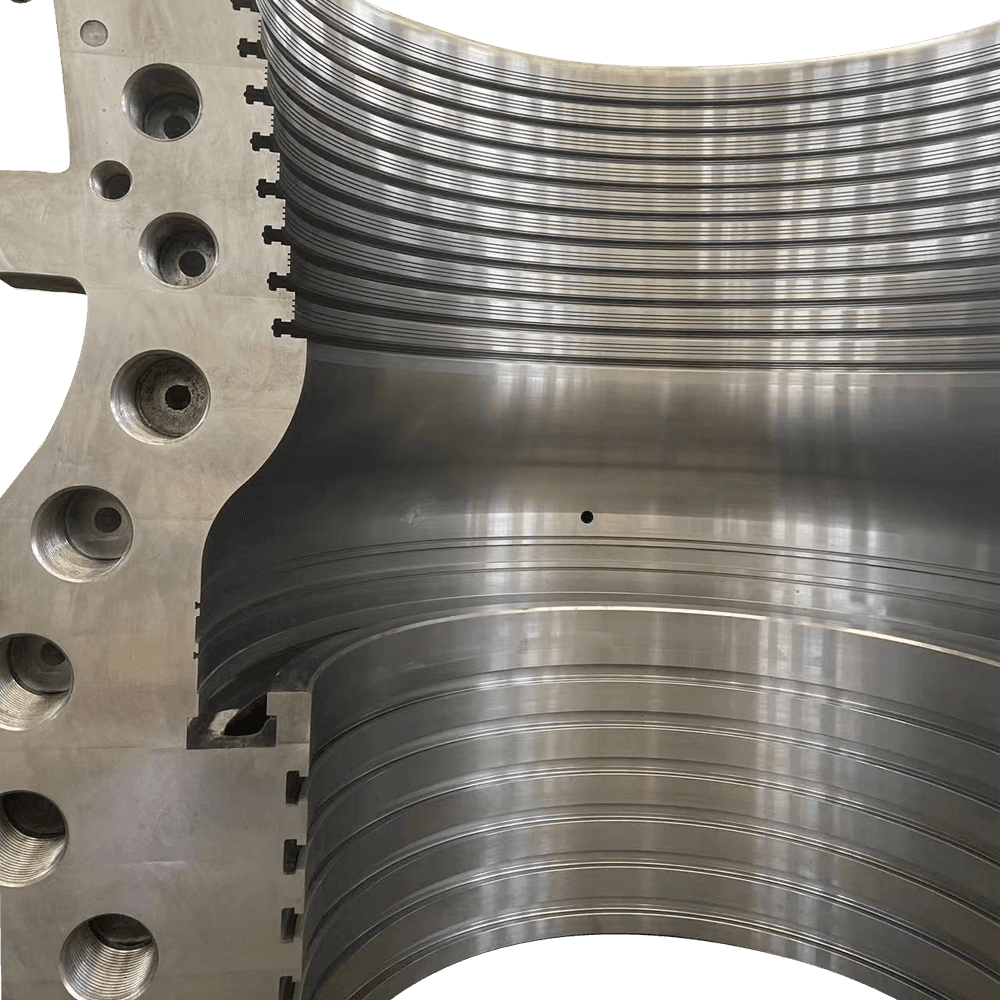 Steam Turbine Accessories Machining from a Precision CNC SupplierWith CNC machining accuracy of 8 μm, this manufacturer can hold tight tolerances on precipitation-hardened alloys like Inconel 718, making them a reliable source for steam turbine components.View Product →
The machining and welding cost profile of a precipitation-hardening superalloy is significantly higher because of post-aging hardness and the need for controlled welding procedures. In the aged condition, Inconel 718 reaches roughly 40 HRC. That is comfortable for carbide tools but requires slower feeds, heavier machine frames, and rigid setups. A specialist like Jiangyin Huanming Machinery Co., Ltd. uses CNC boring and milling centers with 8-micron positioning accuracy precisely to hold tolerances in these difficult materials.
Solid-solution alloys machine more like a conventional stainless steel. The fabricator can rough machine, weld sections into a large casing, and ship without a final aging cycle. Welding is the bigger differentiator. A precipitation-hardened alloy is not weldable in the aged condition without reheat treatment. The heat-affected zone can crack when precipitates dissolve during welding. Standard guidance is to weld in the solution-treated condition and then age the entire assembly.
If the part is too large for a furnace, you must use specialized filler metals, accept pre-weld heat treatment procedures, or redesign around a solid-solution alloy. Inconel 625 is the common choice for welded ducting and casings precisely because it can be welded in any condition. By contrast, Inconel 718 forgings are preferred for shafts and gearboxes where strength dominates and the component can fit inside a controlled aging furnace.
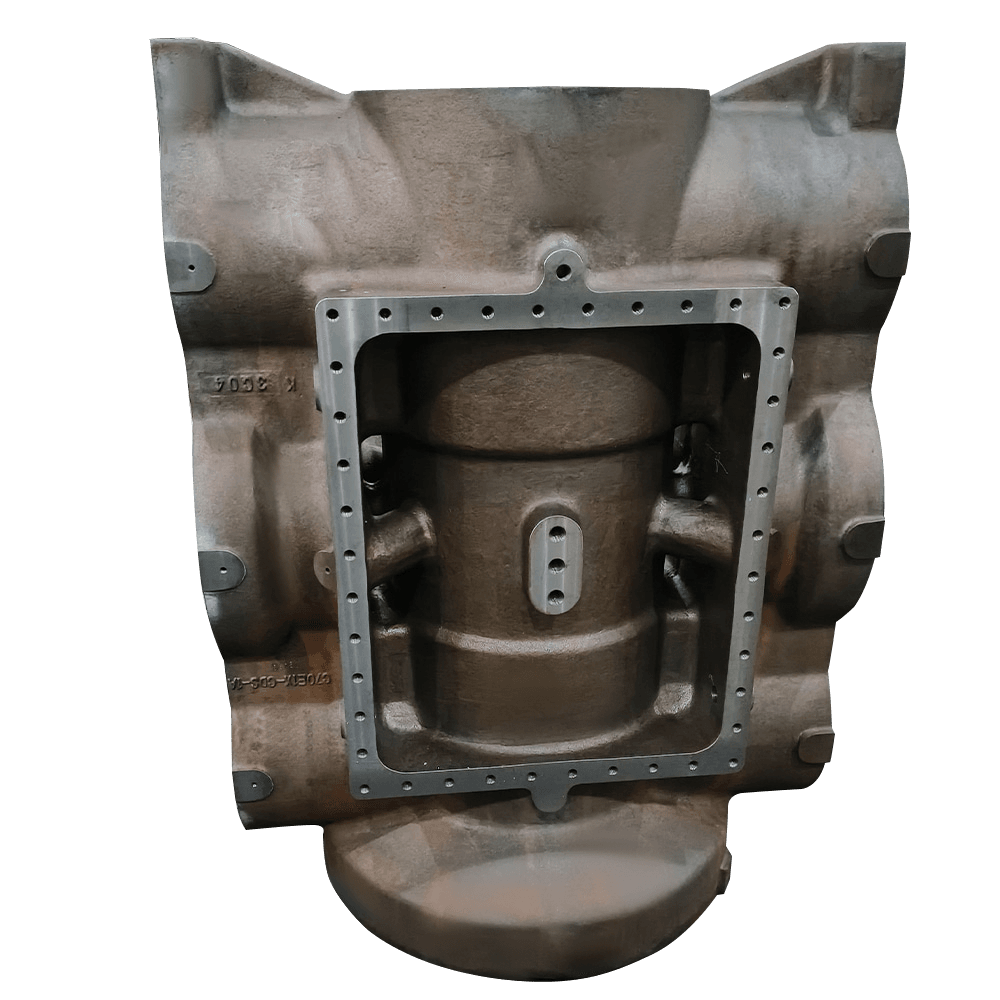 Large Compressor Housing Casting with Heavy-Duty DesignThis supplier offers robust castings for large compressors, built to withstand high loads and ensure stable operation. Their casting and machining capabilities support welded or bolted housings.View Product →
Precipitation-hardening alloys belong on rotating parts and highly stressed fasteners below 650°C. Solid-solution alloys belong on welded casings, combustion sections, and corrosive service above that temperature. That is the short answer. The longer answer is that the final call also depends on fatigue cycles, oxidation atmosphere, and whether the component can be heat treated as an assembly.
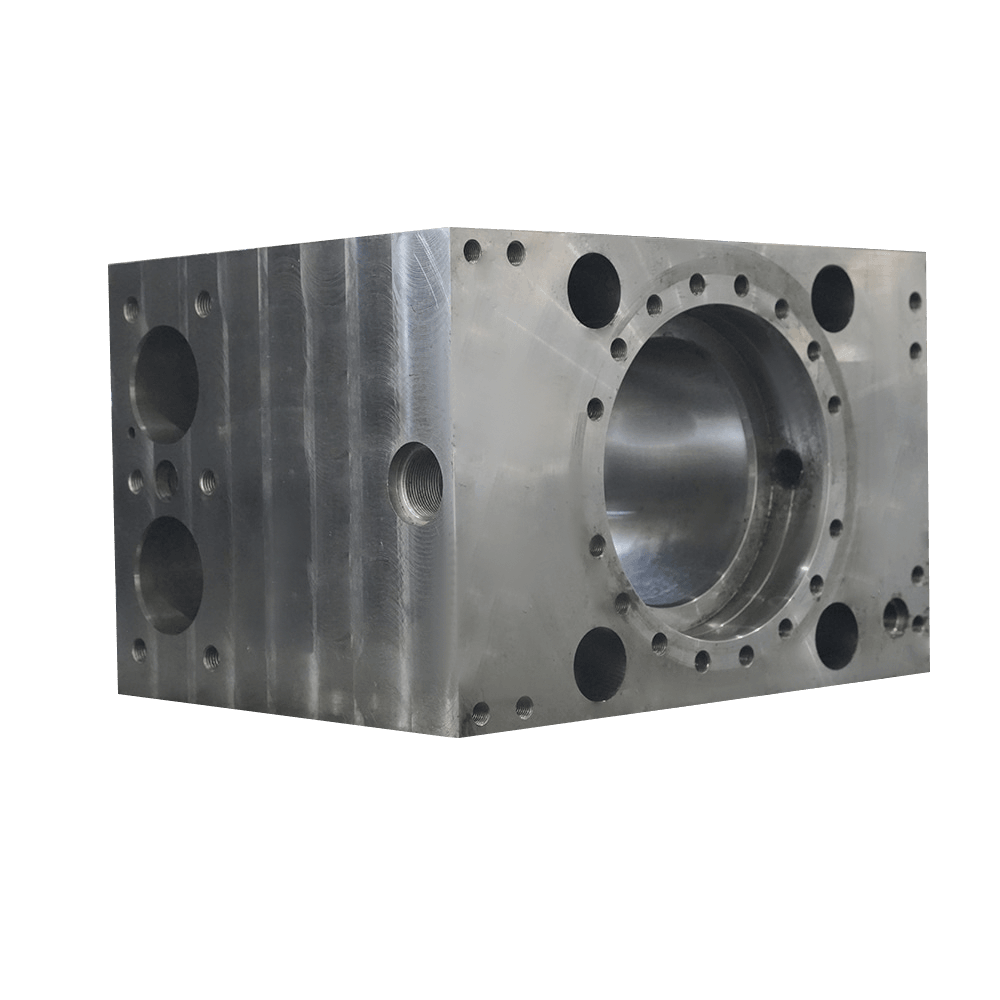 Oil Well Blowout Preventer Components with Precision MachiningFor high-strength oilfield equipment, this company provides blowout preventer parts. Their machining centers achieve 8 μm accuracy, essential for reliable performance of safety-critical components.View Product →
Short excursions are possible, but sustained exposure above 650°C causes the gamma-double-prime phase to overage and strength drops. If a probe shows 680°C for a few hours each cycle, precipitation-hardened 718 is still acceptable. For continuous service at 800°C or higher, a solid-solution alloy is the safer choice.
Inconel 718 typically costs more because of its niobium content and the required heat treatment. Machining cost also rises in the aged condition. Inconel 625 often has a lower total cost for welded fabrications because it can be finished without an aging cycle.
No. The strengthening elements remain in solution, and the composition is designed so that no strengthening phase forms. Standard Inconel 625 and Haynes 188 do not respond to aging treatment. A heat treatment will only relieve stress and improve corrosion resistance; it will not create the precipitates that make 718 strong.
For precipitation-hardened parts, verify the aging cycle, hardness test results, and ultrasonic or magnetic particle inspection. For solid-solution parts, verify chemical composition and weld quality, especially in welded fabrications.
 No. 16 Dayuanli Road, Yunting Street, Jiangyin City, Jiangsu Province, China
 +86-13404286222 / +86-13404286222
 +86-510-86668678
 hmjxboss@gmail.com
Copyright © Jiangyin Huanming Machinery Co., Ltd. All Rights Reserved.Custom Large Components Mechanical Processing Manufacturers

 English
 中文简体
中文简体 русский
 日本語
日本語 Español